Opinion
Fish without borders: the breakdown of food diplomacy
Why hilsa has become the new flashpoint in India-Bangladesh relations
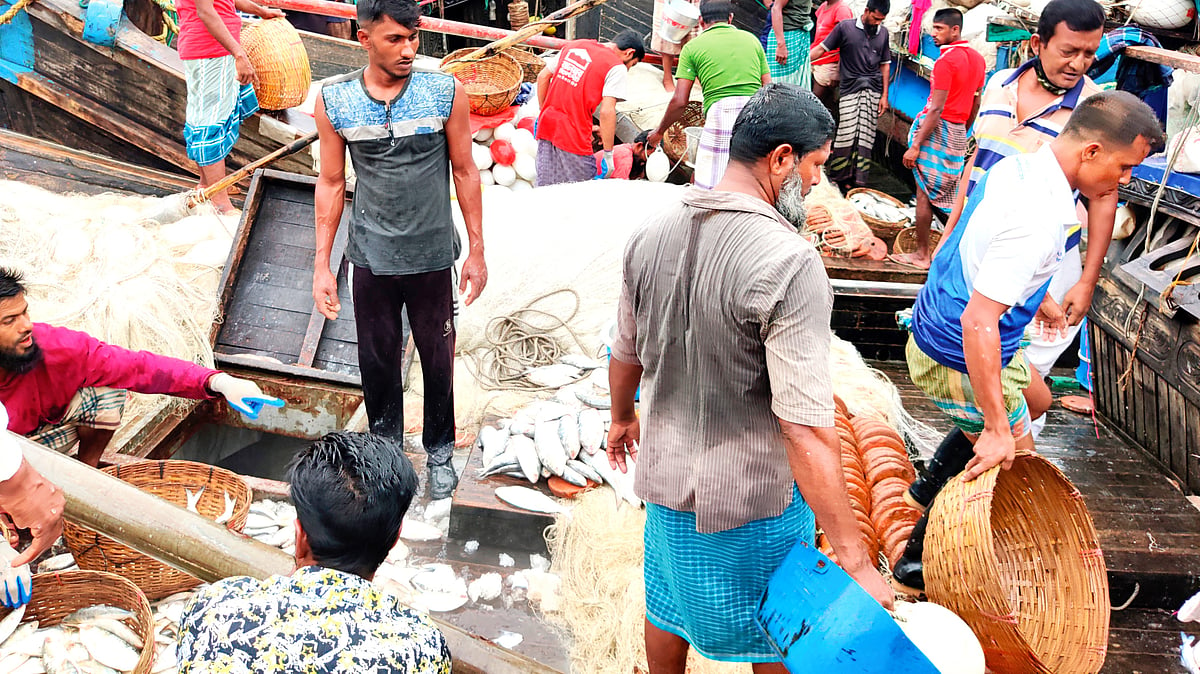
Ahead of Durga Puja, one of the most eagerly-awaited movements across the Bangladesh-India border has been stalled. Bangladesh has not authorised its special consignment of hilsa, or ilish, for India this year, breaking with a practice that had become a ritual.
Over the last two years, as Bengalis prepared for their biggest festival, Dhaka would allow hundreds of tonnes of its national delicacy to travel west of the border, softening the ground for hard-nosed diplomacy with a mouthwatering appeal to ilish-lovers on both sides.
Perhaps it wouldn’t have become a bone of contention if the relationship between the two neighbours hadn’t become pricklier than before. The last two years have been spent in trying to find a new equilibrium after the fall of Sheikh Hasina, whose ‘exceptionally close’ relationship with New Delhi defined bilateral ties for more than a decade. Hasina’s continued presence in India and Dhaka’s demand for her extradition remain major sore points. Bangladesh’s suspension of hilsa export to India assumes significance in this context.
The irony is that hilsa has lately been travelling in the opposite direction. In an extraordinary reversal of the trade flow, around 553 tonnes of Indian hilsa entered Bangladesh through the Petrapole-Benapole border crossing between 20 July and 20 September. Much of it came from Gujarat, where hilsa catches have expanded around the Narmada basin and the Arabian Sea. However, on 22 September, Bangladesh’s department of fisheries cancelled 103 import permits, abruptly stopping the trade.
The Gujarat variety of hilsa encountered a more formidable obstacle than bureaucracy: the Bangladeshi palate. Consumers complained that the imported fish — allegedly passed off as Padma hilsa — lacked the divine texture, aroma and sweetness of that empress of ilish.
One Dhaka foodie said pieces simply fell apart the minute they hit the hot mustard oil. Others complained about a higher concentration of roe (which robs the flesh of its sweetness). Although cheaper and larger, to many Bangladeshis, hilsa from Gujarat was simply not ilish.
This sentiment is not unique to Bangladesh. In Kolkata, fish wholesalers point to Gujarati hilsa pushing out the much sought-after local varieties. “We do not know how the retailers are branding hilsa at the point of sale as we have no control,” Syed Anwar Maqsood, secretary of the Fish Importers’ Association, told National Herald. Gujarati hilsa, he feared, may not command a premium mark-up.
“For me, hilsa comes from Padma, Ganga or Kolaghat. I will certainly not buy if I know it’s from Gujarat,” says prominent Kolkata food vlogger and historian Anindya Sundar Basu, for whom hilsa is an integral part of Bengal’s identity, its folklore, the struggles of the fishing communities who harvest the catch in the early hours of the day. “For me, the hilsa that comes from Gujarat simply won’t hold those familiar flavours and stories,” Basu added.
Such sentiments can seem precious (even pretentious) unless one understands what hilsa means to the Bengali. Eating ilish requires patience, dexterity, familiarity. Its flesh contains a maze of superfine bones that would frustrate a less committed diner. Bengalis, however, developed an entire cuisine around this demanding, delicious, difficult fish — fried, curried, coated in mustard, wrapped in banana leaves and steamed, the coveted head and gleaming tail stirred into vegetable dishes, the roe fried separately as a savoury snack.
Hilsa made the international border seem faintly ridiculous. Bengalis from Bangladesh and Bengalis from India could disagree over politics, cricket (and just about anything else) with the same seriousness that inflected their arguments about whether the hilsa from the Padma was superior to that from the Ganga.
In short, hilsa is more than a fish and more than a culinary obsession. It’s a cultural emblem and, sometimes, a marker of social distinction. To speak of Bengali snobbishness associated with hilsa is to enter a world where taste buds are inseparable from nostalgia, geography and identity that transcends borders.
Sheikh Hasina understood this shared obsession. In 1996, shortly before Bangladesh and India signed the landmark Ganga water-sharing treaty, Hasina sent hilsa over to then West Bengal chief minister Jyoti Basu. Over the years, she sent the prized fish to Mamata Banerjee and Pranab Mukherjee, among others.
In 2012, Bangladesh imposed a broader hilsa-export restriction, but from 2019, Hasina’s government started special exemptions around Durga Puja. In 2021, Bangladesh exported around 2,500 tonnes for the festival. The following year, Mamata asked Bangladesh’s visiting commerce minister to tell Hasinaji to send hilsa again.
But hilsa diplomacy was built on an uncomfortable contradiction. Bangladesh was exporting a national delicacy that its own citizens could barely afford. Hilsa production fell to around 500,000 tonnes in 2024-25, down from 571,000 tonnes in 2022-23.
In West Bengal, production fell from 14,200 tonnes (2022-23) to 8,535 tonnes (2024-25). Earlier decades reached as much as 15,000-20,000-plus tonnes. Scarcity has driven up prices. In Dhaka this September, hilsa sold for roughly 2,000-3,200 taka (Rs 1,550-2,500) a kg. In Kolkata, hilsa of similar size (one kg-plus) from the Ganga or Kolaghat is selling at Rs 1,500-1,800 per kg.
Researchers blame the scarcity on a combination of overfishing, the use of fine-mesh nets, siltation, pollution and ecological pressures. In West Bengal, indiscriminate harvesting of the juvenile hilsa before it reaches maturity has added to the supply problem. Kolkata’s fish traders say ‘non-Bengali’ hilsa from Gujarat — passed off as the real thing — started catering to the shortage both in Bangladesh and West Bengal.
And that’s not all. Another bilateral flashpoint occurred when the Bangladesh High Commission in New Delhi hosted a Hilsa festival on 26 September. Among the invitees was Abhijit Iyer-Mitra, described by Al Jazeera as a “far-right Hindutva ideologue” in a 2023 report on accusations of promoting Islamophobic rhetoric. (In 2024, he publicly called for Bangladeshis and Rohingyas to be deported from India.) Iyer-Mitra reportedly commented that outgoing high commissioner Riaz Hamidullah had reserved “a whole handi of ilish fry” for him.
The symbolism was not hard to miss. At a moment when hilsa was scarce and painfully unaffordable, when the customary puja shipment to India had not been authorised, there was Bangladesh’s diplomatic mission making a banquet of it, and extending hospitality to a commentator known for his hostile remarks about ‘Bangladeshis’.
This, perhaps, is the sad part of the politics around hilsa. There was a time when the Bengali’s favourite fish carried a message of brotherhood and shared ancestry. Now, India’s right-wing brands ‘Bangladeshis’ termites and Indian Bengalis ‘pakhandis’ for eating non-vegetarian food during Durga Puja. Against this backdrop, the Bangladeshi hilsa’s failure to travel across the border reinforces the message of disengagement which its Gujarati cousin only serves to amplify.
Join our official telegram channel (@nationalherald) and stay updated with the latest headlines