Opinion
Gyanesh Kumar’s Kerala file: Questions that never went away
Kerala’s fresh investigation revisits allegations from 2006 and the administrative decisions that followed
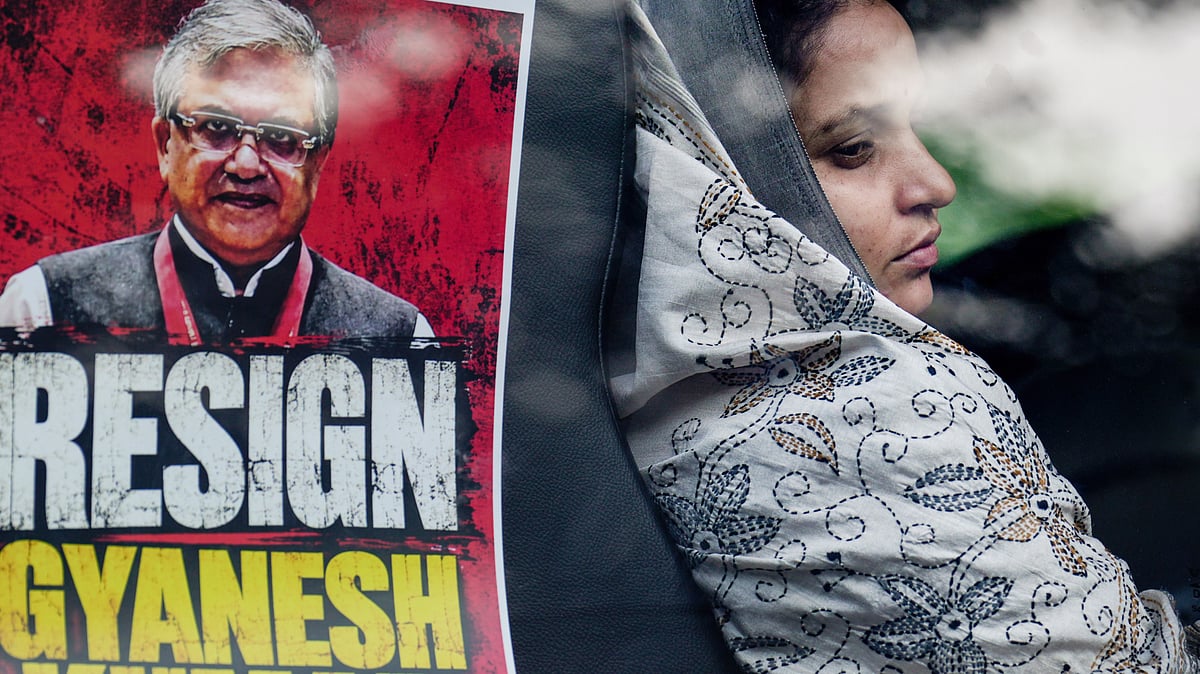
Kerala has ordered a fresh Vigilance probe into allegations dating back to Gyanesh Kumar’s tenure as PWD secretary in 2006.
The inquiry will revisit the earlier finding that no offence could be made out and questions over Kumar’s central deputation.
The case renews scrutiny of how allegations against senior officials are investigated and closed, amid wider questions over the Election Commission.
India is going through an unusually intense institutional confrontation over the Election Commission of India (ECI), with chief election commissioner (CEC) Gyanesh Kumar facing mounting criticism over the functioning of the poll panel, the special intensive revision (SIR) of electoral rolls and questions about transparency and internal decision-making.
The controversy has moved beyond the routine political criticism that follows every election and become a national debate over the credibility of an institution whose decisions determine the integrity of the democratic process.
It is in this charged atmosphere that Kerala has reopened a nearly two-decade-old vigilance trail involving Kumar. The development is significant not merely because it concerns the present CEC but also because it raises questions about the administrative history that preceded his elevation to one of the country's most powerful constitutional offices.
The decision by Kerala home minister Ramesh Chennithala to order a fresh vigilance investigation into allegations dating back to Kumar's tenure as PWD secretary in 2006 brings back a controversy that had appeared to disappear into the state government's files. It also raises a larger question about how India's administrative system deals with allegations against officers who continue to rise despite unresolved questions about their past.
The original controversy centred on the Kerala State Transport Project, a major World Bank-funded road development programme in which PATI-BEL, an Indo-Malaysian consortium, was involved in construction work. The project was already facing disputes over payments, delays, contractual obligations and land acquisition when its Malaysian project manager Lee See Been returned to Malaysia and died by suicide in November 2006.
His purported suicide notes allegedly mentioned Kumar, who was then PWD secretary and the senior official responsible for the department handling the project. The notes reportedly raised allegations of harassment, corruption and demands connected with the release of payments.
Those allegations were never established against Kumar in a court of law and must remain allegations unless the fresh investigation produces evidence to establish otherwise. However, the circumstances were serious enough for the V.S. Achuthanandan government to remove Kumar from the PWD and order a vigilance inquiry.
That action is an important part of the story. The allegations were serious enough at the time to trigger official action; they were not invented decades later to attack Kumar in his present constitutional position. The real mystery begins with what happened after that initial response.
The most important unanswered question is how Kumar subsequently obtained clearance to move from Kerala to the Union government on central deputation while the shadow of a vigilance inquiry remained over his service record. Central deputation is not an automatic administrative exercise, particularly for an officer facing allegations serious enough to have resulted in his removal from a sensitive departmental position and the initiation of a vigilance investigation.
The relevant files should establish who examined the request, what the state vigilance machinery recorded, whether any objection was raised, whether the pending inquiry was disclosed to the Union government and which authority finally granted clearance.
The issue has acquired particular importance because former vigilance chief Sibi Mathews has questioned how such clearance could have been obtained when an inquiry was pending. Former finance minister T.M. Thomas Isaac has also raised questions about the manner in which Kumar was allowed to proceed on deputation. These questions do not establish that Kumar received improper protection, but they create a clear documentary trail that the fresh investigation must follow.
Isaac's recollections are especially relevant because he was part of the Achuthanandan government when the controversy unfolded and had direct knowledge of the administrative problems surrounding the KSTP. He has recalled that PATI-BEL complained about contractual violations and sought liquidated damages, while the PWD had not even issued a formal memo recording the contractor's alleged lapses. This prompted him to summon Kumar and question him about the matter.
The recollection places the controversy within a larger administrative dispute rather than treating the Malaysian engineer's death as an isolated event. It also highlights an uncomfortable contradiction in Kerala's political history: the Achuthanandan government had acted against Kumar and initiated the vigilance process, yet the same administrative system subsequently allowed him to leave Kerala, enter the Union government and continue his rise through the bureaucracy.
Isaac is now among those demanding that the old matter be properly investigated. This makes it all the more important to reconstruct what happened during the intervening years rather than reduce the issue to a political contest between the Left Democratic Front and the United Democratic Front.
The history of the Achuthanandan government also deserves examination without political simplification. The available account does not support the claim that the government simply allowed the allegations to disappear from the beginning. Kumar was removed from the PWD and a vigilance inquiry initiated. The crucial part of the story lies in the period after those decisions.
The investigation continued for years, Kumar moved to Delhi on central deputation and his career took him through important positions in the Union government before he became an election commissioner and eventually chief election commissioner.
Somewhere between the initial decision to investigate and Kumar's eventual rise to the country's highest electoral office lies a missing administrative history that can be reconstructed only through the original vigilance file, government correspondence, deputation records and the decisions that brought the inquiry to an end. The fresh investigation becomes meaningful precisely because it can examine that history rather than rely exclusively on the political memories of those who were in power at the time.
The most revealing contradiction has emerged from the old vigilance record itself. The matter was apparently not simply abandoned without a conclusion. The preliminary inquiry continued for several years and eventually found that no offence could be made out, with that conclusion subsequently receiving the state government's approval.
This is important because the present political narrative has sometimes suggested that the investigation was simply allowed to die. The documentary trail now being examined, however, indicates that there was a formal conclusion.
The question therefore shifts from why the inquiry was stopped to whether the inquiry that produced the clean chit was complete, impartial and properly conducted. That distinction is at the heart of the new investigation. A fresh probe cannot responsibly begin with the assumption that the earlier officers were wrong, but neither can the earlier conclusion be treated as permanently beyond examination merely because it was once accepted by the government.
The Vigilance Bureau must determine whether relevant witnesses were examined, contractual records properly scrutinised, allegations concerning payments and official decisions pursued, and the circumstances surrounding Lee See Been's death adequately investigated. It must also establish whether the final conclusion was supported by the evidence available at the time.
The purported suicide notes are equally important because they have remained at the centre of the allegations, while their evidentiary status has never been satisfactorily resolved in Kerala's public record. The documents reportedly contained allegations against Kumar, but Kerala investigators did not have straightforward access to the original material, and the circumstances surrounding the Malaysian police investigation have remained part of the controversy.
The new inquiry must establish what documents were actually available to investigators in 2006, what efforts were made to obtain them, whether their contents were independently verified and whether the absence of the original documents affected the earlier inquiry's conclusion. The passage of time makes this exercise difficult, but it cannot by itself become a substitute for investigation, particularly when the controversy involves a public official who subsequently reached one of the country's highest constitutional offices.
The significance of the case extends beyond Kumar. If the fresh investigation finds evidence of wrongdoing by him, the legal process will have to take its course. If it finds that the original investigation was weakened, crucial evidence ignored, witnesses left unexamined or the closure influenced by considerations unrelated to the merits of the case, responsibility would also have to be examined at those levels.
The questions would then include who supervised the original inquiry, who recommended closure, who approved the conclusion, who processed Kumar's deputation and whether the pending allegations were properly considered before he was allowed to leave Kerala.
This assumes greater importance in the national context, with the ECI facing an unprecedented level of public scrutiny. The SIR has generated political confrontation, protests and litigation, while questions have also been raised about the internal functioning of the three-member Commission.
Kerala therefore faces an unusual institutional test. The government must ensure that the fresh vigilance investigation is neither a political exercise against a constitutional functionary nor an attempt to protect an officer because the allegations are old and inconvenient.
At such a moment, the reopening of the Kerala file gives the country an opportunity to examine an older and more fundamental question: when a powerful public servant rises through the system despite serious questions about his past, who is responsible for ensuring that those questions were genuinely answered before the system moved on?
Join our official telegram channel (@nationalherald) and stay updated with the latest headlines