Opinion
Disease on tap, government in denial
How did we get from water-rich to water-poor in such a short time, asks Rashme Sehgal
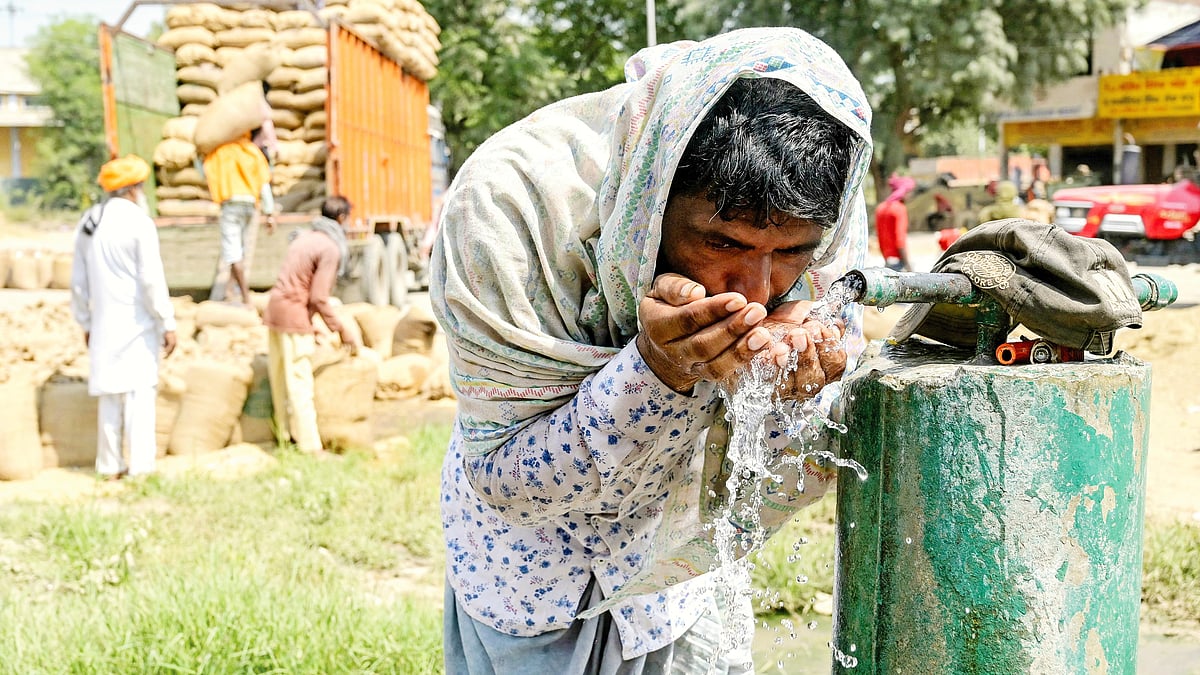
Water is life, they say. These days, in India, water is death and disease. With sewage contamination emerging as the leading cause, keeping piped drinking water safe is becoming both increasingly urgent and increasingly difficult. From city after city, reports are flooding in of poorly laid pipelines contaminated by seepage from dangerously close sewage lines. Ageing, corroded pipes — often 40–50 years old — have been identified as the culprits, but no remedial plans are in sight.
The very first fortnight of January saw several outbreaks of waterborne diseases. In Gujarat’s capital Gandhinagar, over 150 children were admitted to hospital with typhoid in early January. In Bengaluru, India’s tech hub, 30 households in Lingarajapuram reported diarrhoeaand stomach infections on 4 January. On 7 January, residents of Greater Noida fell ill after drinking contaminated water.
These incidents came hot on the heels of the outbreak in Indore — apparently India’s ‘best, cleanest, smartest’ city — where 3,200 people were reported sick by 31 December 2025. Severe bouts of diarrhoea claimed 17 lives and led to the hospitalisation of 200 residents of Bhagirathpura.
On 8 January, Down To Earth reported that residents of Patna’s Kankarbagh Housing Colony were bracing for a similar outbreak after taps began discharging foul-smelling yellowish water. Despite complaints that the water was unfit even for washing clothes, the municipal corporation resorted to stopgap repairs.
The story is no different in Raipur, the capital of Chhattisgarh, where 100 residents of the Kachna Housing Board area fell ill. In Jharkhand’s capital Ranchi, officials are reported to have identified over 300 damaged water pipelines. Gurugram was not been spared either: in December 2025, 60–70 residents in Sector 70A fell ill due to contaminated water, with at least 10 hospitalisations. Diarrhoea, typhoid, hepatitis and prolonged fever have been leading to hospitalisation and, in some cases, death.
This is the pattern being reported across the country, even in water-abundant Odisha. Government statistics show that 42.24 lakh people in Odisha fell ill with acute diarrhoea and 4.63 lakh with typhoid between 2017 and 2022 — all due to polluted water. Cholera outbreaks were reported from an alarming number of places in Odisha, including Puri, Cuttack, Dhenkanal and Jajpur.
All this points to systemic failure and an impending national emergency. In 2018, a Niti Aayog report had already warned that India was going through its worst water crisis in recorded history: a staggering 600 million Indians faced high to extreme water stress, 70 per cent of groundwater was polluted and over 200,000 people died every year due to waterborne diseases.
****
To make matters worse, our water sources are diminishing rapidly. According to a recent World Bank report, India feeds almost 18 per cent of the world’s population with only 4 per cent of global water resources. India’s rivers — which continue to be our main source of drinking water — are heavily polluted.
In August 2024, a study commissioned by the Central Water Commission revealed that 81 rivers and tributaries showed either traces or an extremely high concentration of one or more toxic heavy metals including arsenic, cadmium, copper, iron, lead, mercury and nickel.
Mercury levels in samples collected from the Yamuna at Palla revealed toxic heavy metal pollution to be nine times higher than permitted limits. “The presence of heavy metals above prescribed limits can pose significant threats to flora and fauna due to their non-biodegradable nature,” admitted Kushvinder Vohra, chairman, CWC, ministry of jal shakti (water resources).
The Ganga was found to be polluted with four heavy metals — arsenic, lead, iron and copper. The west-flowing rivers south of the Tapi basin came second, with 64 per cent — that’s 23 of 36 monitoring stations — indicating excessive metal. Metal mining, smelting, foundries and other metal-based industries contribute to this contamination.
What is also worrying is that groundwater extraction has exceeded annual recharge, resulting in overexploitation and depletion of water tables in several of our larger states.
Experts urge expanding water harvesting and scaling up the Jal Shakti Abhiyan’s National Aquifer Mapping Programme for artificial recharge. They also call for de-silting and restoration of tanks and canals, not only to increase their carrying capacity but also to improve groundwater replenishment.
****
To prevent rainwater from turning into ‘drain water,’ hydrogeologists at Manav Rachna International Institute of Research and Studies have improved conventional rooftop rainwater harvesting methods to enhance aquifer storage. The experiment, conducted at four sites along National Highway 19 in Faridabad, used a four-step filtration process to ensure rainwater percolates through the soil and replenishes the city’s groundwater aquifer.
INTACH conducted another experiment on the Assi river, which joins the Ganga at Assi ghat in Varanasi. Thousands of crores of rupees have been spent on ‘cleaning the Ganga’ but the reality is that more than one billion gallons of raw sewage and industrial effluents still flow into India’s national river daily.
Varanasi is home to five million people, and has 33 nallahs that discharge untreated sewage directly into the river. It’s hard, scientists say, to imagine Tulsidas writing Ramcharitmanas on the banks of what is now no more than a slushy, dirty drain choked with plastic and muck.
“We cut our teeth while cleaning up the Kushak nallah in Chanakyapuri in 2010, the Palam nallah in Dwarka in 2012 and the foul-smelling drain which passes the eastern entrance of the Taj Mahal,” recalls Manu Bhatnagar, principal director of INTACH’s natural heritage division.
INTACH’s strategy was strikingly simple: 100 litres of friendly bacterial concentrates were placed along the river. The bacteria helped break down organic waste, increased dissolved oxygen levels and reduced the foul odour to a great extent. “These bacteria are used in sewage treatment plants (STPs), but this is the first time they’ve been applied to clean up a flowing stream,” said Bhatnagar, adding that bacterial concentrates cannot treat industrial effluents.
The results were positive: within two months, there was a 60–70 per cent reduction in pollution levels and a sharp reduction in the smell, as confirmed by the state pollution control board in Varanasi and independent labs.
“Installing STPs in Varanasi is estimated to cost over Rs 75 crore and will only become functional once land is acquired, compensation paid, plants built and all the houses connected to sewage pipes. In contrast, bio-regeneration for all 33 nallahs costs just around Rs 3 crore per year,” said Bhatnagar. Yet, neither the Central nor state government showed much interest in this simpler, cheaper solution.
****
India’s ‘waterman’ Rajendra Singh laments the transition from water sufficiency to water deficit. “Our rivers are in the ICU. Our groundwater has become contaminated. Neither the Centre nor state governments have come up with any long-term plan to tackle this situation,” said the water conservationist and Ramon Magsaysay awardee.
He finds it ironic that India, with 2,500 years of expertise in managing droughts and floods — two sides of the same coin — is now among the world’s most water-deficit nations.
A government that pretends to swear by ancient Indian knowledge systems has totally ignored “traditional, community-driven, time-tested models on handling drought”, says Singh. Reviving these water models are, he believes, the key to boosting water tables and ensuring daily access to clean drinking water. Is anyone listening?
Join our official telegram channel (@nationalherald) and stay updated with the latest headlines