Opinion
Iran and the new ‘Art of War’
Diplomacy hasn’t brought much fruit either as it failed to convince rational thinking
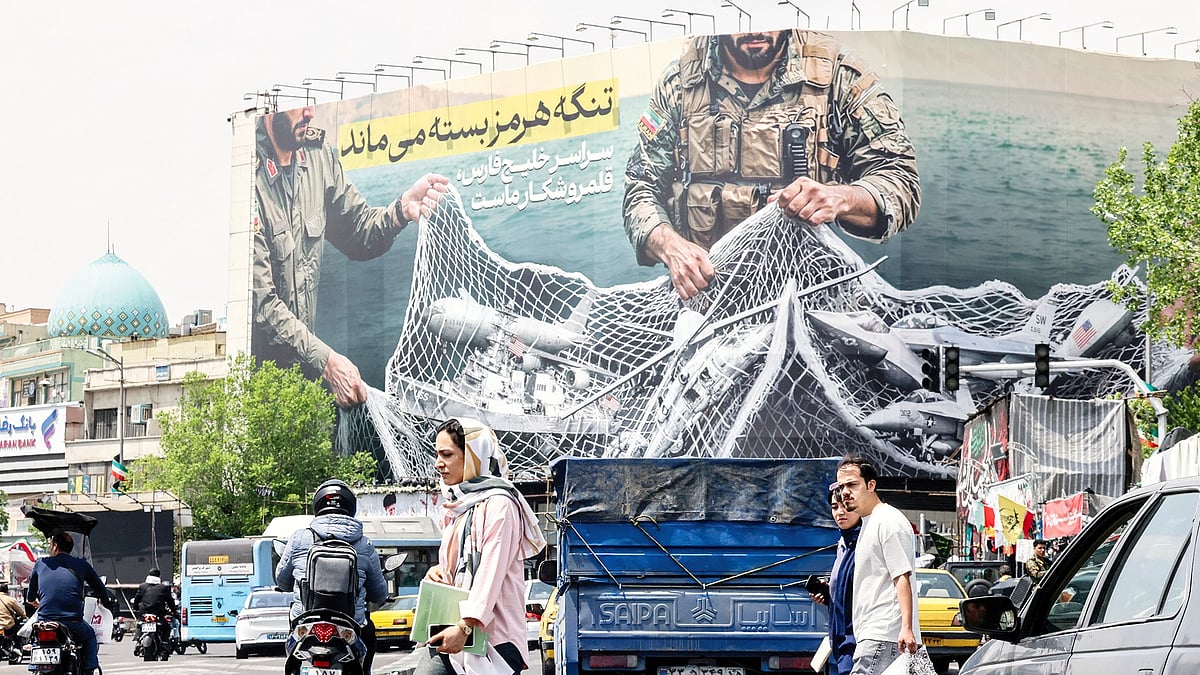
The US-Iran war has brought unending misery. The dust has barely settled, yet the conflict continues to stir new trouble. The US believes the world must succumb to its hard power; history, however, suggests otherwise. The Hormuz crisis has added another failed chapter to the US’s long record of foreign-policy misadventures. Beyond President Donald Trump’s own drumbeat of claims, Washington appears to have fallen short on all its stated objectives: reopening the Strait of Hormuz, curbing Iran’s nuclear programme, changing the Iranian regime and dismantling Iran’s regional proxies.
Nothing has favoured the US. On the contrary, Iran has not only survived but emerged as a formidable regional power. Diplomacy, too, has yielded little, failing to produce meaningful results or persuade the parties involved. Out of the dust, Iran has risen again like a phoenix. This is a moment that may well enter the annals of modern history, heralding a new roadmap, a new order and a new sense of national glory. Perhaps this is an occasion that reflects the ideals of the Iranian Revolution — a moment in which Iran has rediscovered the enduring strength of its culture and civilisation and the seeds of its own regeneration.
As the acclaimed Iranian novelist Shahriar Mandanipour once wrote, Iranians are too proud of despair and belong to too ancient a civilisation to collapse into that pit of darkness. They have redefined the meaning of modern warfare, revealing an unprecedented willpower in the face of overwhelming odds and one of the world’s most powerful militaries.
The order of Pax Americana has begun to fracture. The war has brought a defining moment that could reshape global politics and the very art of warfare. Yet this moment has brought neither simple rejoicing nor a celebration of rationality prevailing over barbarism by ending a devastation that has held the world hostage. Instead, it has sent a message to the US: Iran does not believe in surrender. It has endured decades of coercive sanctions without capitulating.
President Donald Trump, perhaps one of the most unconventional presidents the US has ever had, is known for his unprincipled and often amoral positions, as well as his tendency to humiliate allies and adversaries alike. But the war has reversed the tide, bringing shame and dishonour to Trump both at home and across the wider world. Iran brought him to his senses — not through words, but by charting a new geopolitical cartography of the region and beyond.
This is the moment that brought the gift of humiliation to Trump and his warmongers. The long and troubled history of US-Iran relations offered little coherence to the Trump administration’s approach. As former Iranian President Hassan Rouhani once warned, “America should know that peace with Iran is the mother of all peace, and war with Iran is the mother of all wars.”
The True Promise
When the war started, the world had different worries. Ukraine and Gaza were still haunting. Iran lost its great leader Ayatollah Khamenei, a devastating moment for Iran and for the larger Shia world to whom he was a Rahbar (guardian for all).
From the rubbles of his passing, his famous words "We will bring the enemy to its knees" perhaps inked the final message of ‘operation True Promise’ that brought the glory to Iran. It was a moment of ‘David against the mighty Goliath’. ‘Operation True Promise’ was Iran's strategic codename for its military operations.
It started as a wave of Iranian retaliation. First in April 2024 against Israel bombing Iran's consulate in Damascus. Second in October 2024 against the killing of IRGC leaders, third during the 12 days war in June 2025 and finally the recent war in 2026.
For the US, it was the return of the ‘Vietnam moment’, when it lost to the tiny country in the East, and forced to retreat for a humiliating loss. Iran has further unmasked the US power that it has never won a decisive war. It failed before, it has brought chaos in Iraq and Afghanistan but never won a war. This gave Iran a reason to blow off Trump's rhetoric.
The lesson was never learnt in the White House. The nightmare that engulfed half the world and particularly the Persian Gulf was inadmissible mistake. For Iran, it was survival, and they did!
After the brief high-level talks in Switzerland, the early war concluded through mediation but as it was ill designed, the war again broke-out. On 17 June, the fourteen points memorandum of understanding endearing to control the fragile peace found some closure, but before it could have seen the dawn, the madness unfold again and the ceasefire found the untimely death before it could have brought any relief.
The US resumed War on Iran on 8 July after the exchange of fire at Hormuz. Despite the asymmetric war, The US couldn’t achieve any objectives of invasion. The message of True Promise came alive, despite heavy loss, Iran definitely won the war. Still far-fetched for Iran, the victory appears not simply a triumph of military warfare or political survival but the seed of a new dawn for the future of the Middle East and the larger world.
Iran’s triumph has arrived with a new ‘Art of War’, outshining the military Industrial complex in the US and their cohorts in Israel. The war made Iran a great regional power and a global image that knows how to safeguard its national interest and its sovereignty without compromise. But the most glaring message was exposing the limitations of great power and their coercive structures.
The Message
Every war has two major strategic goals; political and military. The US and Israel wanted political regime change and crippling Iran’s military capabilities. Iran not just managed to survive with both, it gave the American strategist a tough medicine to swallow.
This war has given a new grammar of international politics, exposing a new strategic discussion; the war can’t be won just by brute force but with a better strategy and the will to sacrifice. The fact was, the US was fighting Israel’s illegal war. Iran never declared a war on them rather it was brought on Iran and they retaliated in response to safeguard its sovereignty. The US had no reason to bomb Iran causing chaos carrying a false belief that Iran is another Venezuela.
The fallacy, however, was it's not just the weapon and might. Iranians have survived the shadow of a long war of sanctions and isolation. It made them better planned, more tactical in response and far superior in executing strategy. They didn’t respond with force alone rather with two front strategies.
Iran always went for diplomacy and mediation but it didn’t fetch the fate of normalcy. First US withdrawal from UN sanctioned JCPOA agreement in 2018 and then Oman talks to clear off all outstanding issues. The problem was, the US and Israel didn’t believe that Iran could survive. Iran showed calibrated retaliatory measures, statecraft and strategic depth using Hormuz as a deterrence that forced the US to look for exit.
This war has brought many lessons. In the age of total war nobody can be a sole winner. Modern warfare is unlike medieval times; it’s devastating for all. But Iran’s strategic depth has forwarded a new art of war, it has changed the old paradigm. It now controls the Hormuz like never before and now the weaponisation of it is a forever strategy that has become a non-negotiable.
The Clash of Narratives: What Next for Iran?
It’s not just advanced technologies that give an edge but narratives and symbolism as well that apply as potent weapons in modern warfare. The Mirab event was devastating. It became a symbol for Iran’s strategy. It helped Iran to mask off the duplicity of western narratives.
From the podium of the UN to Football grounds, it captured the attention of the loss of innocent children's lives exposing the double standard of human rights violations. The Mirab incident was the lowest point. It was the mockery of the International Humanitarian and Human Rights Law. Mirab became the symbol of Iranian resistance that gave them the glory in the battlefield. The war has come to halt crossing for diplomacy, but mediation has its limitations against ill intentions of hostile powers.
Peace is elusive until it is built on trust and respect and Iran would never trust American intentions. The fragile peace might not see the dawn of its true promise and Iranians know its fate. Iranians have set the terms that no power can force her to comprise on its military capabilities and sovereign choices.
They have sent a message, we didn’t start the war, but we knew how to end, its war until victory. The war has made Iran a regional hegemon that would change the regional order. This war will go down in history as how a nation of few millions won everything, the war, the narrative, the diplomacy with its will power. This will change the world, its order and new ideals.
Dr Mishra is a faculty at the Nelson Mandela Centre for Peace & Conflict Resolution Jamia Millia Islamia, New Delhi. He can be reached at gf.pmishra@jmi.ac.in
Umarat Firdous is a research intern at the Centre for Contemporary China Studies, Ministry of External Affairs, and a research associate at middleeastoutlook.com. She can be reached at umarat.firdous27@gmail.com
Join our official telegram channel (@nationalherald) and stay updated with the latest headlines