Opinion
Why the UK premiership is such a hotseat
Ashis Ray on the political churn in the UK that has now seen the exit of six prime ministers in 10 years
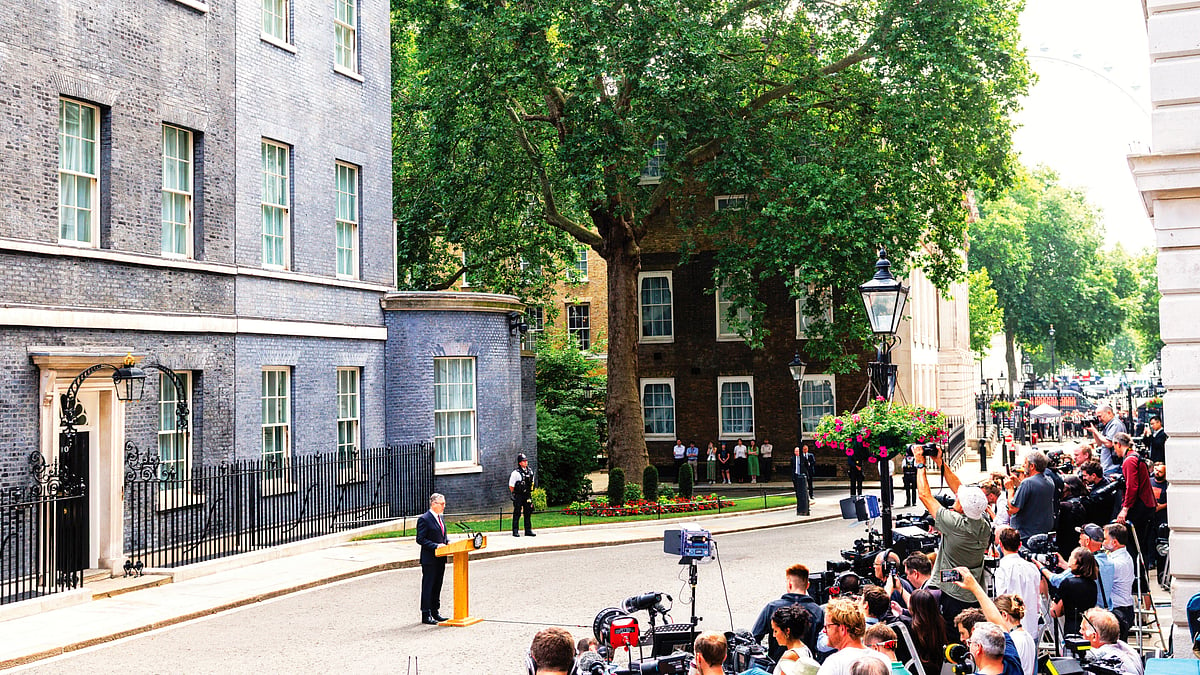
Seven prime ministers in a decade, as the UK is about to witness, is quite a testimony to political instability. Britain is wrestling with itself and consequently, short-lived governments.
Since World War II, Clement Attlee, Winston Churchill, Harold Wilson (for six years with a snap election in between), Margaret Thatcher (for 11 years), John Major (for seven years with an election in the middle), Tony Blair (for a decade before he voluntarily stepped down) and David Cameron have completed five years or more as prime minister.
After being re-elected in 2015, Cameron proceeded with an election manifesto promise of a referendum on Britain’s continued membership of the European Union. This had been a very fractious issue in his Conservative party since the 1980s. A pro-Europe politician among sceptics, he was sanguine his popularity would put the matter at rest once and for all. But he was in for a shock.
The vote not only divided his party and government but the country as a whole. Cameron had underestimated the challenge posed by party colleague Boris Johnson and the ultra-nationalist brigade that join forces with him. He did not take into account the fact that the leader of the opposition Labour party, Jeremy Corbyn, belonged to the 1970s era of left-wingers opposed to the European Common Market, as the EU was then known. Corbyn officially supported the ‘Remain’ campaign but half-heartedly at best. The verdict: Brexit!
In June 2016, Cameron quit as prime minister. Theresa May succeeded him, but time and again, her party MPs blocked passage of Brexit Bills in the House of Commons. Johnson was behind the machinations to thwart her. May was compelled to step down.
Having engineered a coup d’état, Johnson took over as prime minister in the summer of 2019. In December, he called a midterm election on the slogan of ‘Get Brexit Done’. An exasperated British electorate lapped this up and extended a resounding endorsement. Johnson did get Brexit done, but his rushed deal was more unfavourable to the UK than anything May had proposed or negotiated.
His successor Liz Truss lasted 49 days, ousted after piloting a terrible Budget. This so destabilised the bond markets in Britain that it almost brought the British economy crashing down, notwithstanding its sovereign AA rating from S&P and Fitch.
With no takers for the premiership, Rishi Sunak, a rookie who had been an MP for just seven years, filled the void. He had been Johnson’s chancellor, but resigned in the rebellion that ousted him.
Sunak steadied the boat and was at the helm for 20 months, but made no impression with the British people. He and the Conservatives were predictably wiped out when he called a vote in July 2024.
During the musical chairs — five prime ministers in six years — Labour recovered from its worst defeat under Corbyn in 2019 to a landslide victory, returning a tally of over 400 MPs in a House of 650, next only to the record set under Blair in 1997. Keir Starmer, a barrister and a former head of Britain’s Crown Prosecution Service, made it happen, but he too came unstuck in less than two years.
Britain’s right-wing news media went for his throat from Day 1. Starmer did not help matters by implementing some unpopular policies, which affected the elderly and children. The decision to increase employer contributions to National Insurance was also unpopular. His choice of Peter Mandelson — a controversial Labour grandee with links to convicted child sex offender Jeffrey Epstein — as the British ambassador to the United States became one of the most serious political crises of Starmer’s premiership.
Under Starmer, state school education and the National Health Service — important yardsticks of government performance in Britain — improved significantly. There was a record drop in immigration, a vexatious issue among white working class Britons as also some Indian-extraction immigrants, and a trigger for the rise of the far right Reform UK party.
Inflation eased but the economy didn’t take off. Unemployment increased and wages didn’t. The cost of living crisis persisted and became a theme.
Starmer was on the verge of pulling off a potential game-changer — a UK-EU summit, scheduled in July, to discuss a single market on goods trade. The British economy has suffered a devastating loss in trade turnover since Brexit that cannot be compensated by any free trade agreement with other countries or blocs.
Starmer was a safe pair of hands, but he lacked charisma and communication skills. His government failed to transmit its achievements to the British public. After the outcome of last month’s local and regional elections, the writing was on the wall. A YouGov poll in May 2026 showed 69 per cent viewing Starmer unfavourably.
His MPs realised that with such ratings, Labour was not going to overcome the serious threat from Reform, nor from the Green Party (who had taken away hard left and Muslim votes with its markedly pro-Palestine stance), to win the next election in 2029, if Starmer was retained as prime minister.
So, Andy Burnham, until last week a popular mayor of Greater Manchester in northwest England and now elected to the Commons in a by-election, is odds-on favourite to step into Starmer’s shoes, making him Britain’s seventh prime minister in 10 years.
We’ll learn in due course if the procession of UK prime ministers lengthens before the next general election — watch this space.
Ashis Ray was formerly editor-at-large of CNN, and is the author of The Trial that Shook Britain. More of his writing here
Join our official telegram channel (@nationalherald) and stay updated with the latest headlines