Opinion
The youth against Modi
Previous movements challenged Modi from constituencies he could portray as outsiders. This one has brought the challenge home
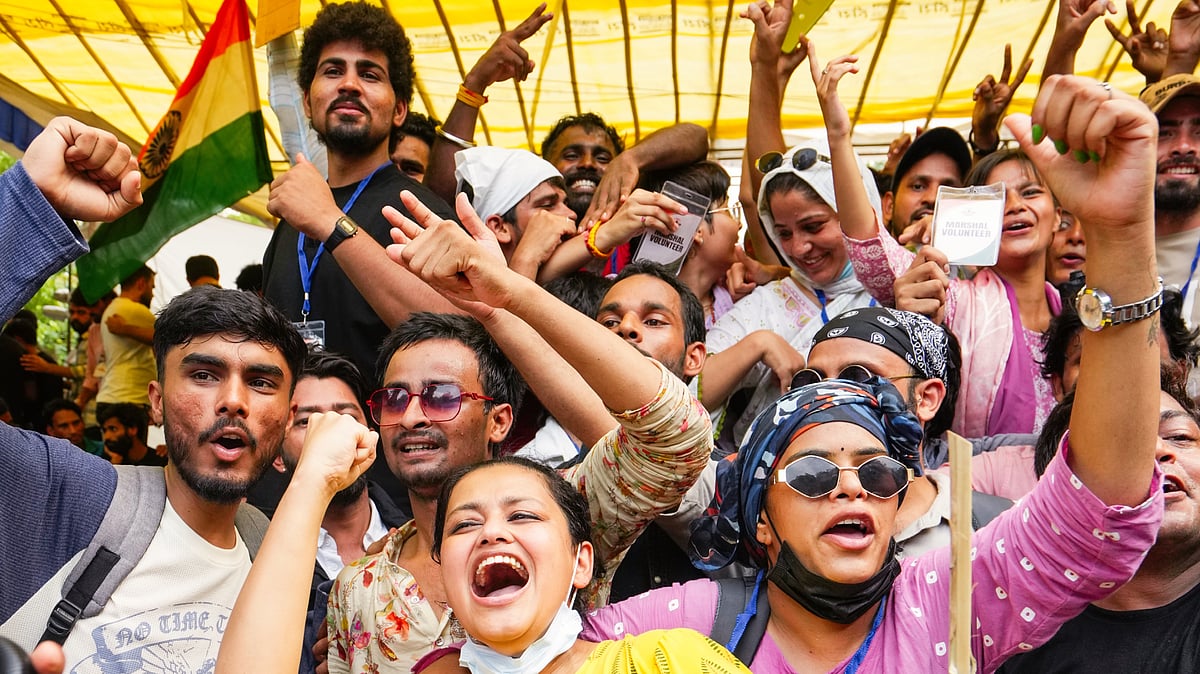
For more than a decade, Narendra Modi has mastered the politics of division. Whenever a protest threatened his government, the BJP assigned its participants an identity, isolated them from the majority and portrayed them as enemies of India. The just concluded youth uprising showed that that machinery is failing. Modi now confronts not a community he can marginalise but a generation that grew up under his rule and includes many from the BJP’s own social and electoral base.
The Cockroach Janta Party (CJP) began as satire, reclaiming an insult aimed at unemployed young people. But it became a vehicle for anger over examination-paper leaks, corruption, student suicides and the scarcity of jobs. Its immediate demands — including the resignation of education minister Dharmendra Pradhan which came through on Saturday, 25 July — travelled easily across regions, castes and classes.
A leaked examination does not ask a candidate’s religion before destroying years of preparation. Unemployment does not spare a household because it supports Hindutva. The movement turned private disappointment into a shared accusation: a powerful and corrupt system is cheating the same young Indians whom Modi promised to empower.
That distinguishes it from the protests against the Citizenship Amendment Act (CAA). Those demonstrations raised a fundamental constitutional question, but the BJP depicted them as Muslim mobilisation against a government supposedly defending persecuted Hindus. Shaheen Bagh was recast as evidence of minority obstruction. Pakistan was invoked, and critics of the law were branded anti-national and anti-Hindu. The propaganda worked because communal polarisation shaped how millions of BJP supporters understood the agitation.
The farmers’ movement was larger, more sustained and ultimately forced Modi to repeal three agricultural laws. Yet the government found an identity through which to contain the political damage. Because many visible protesters were Sikh farmers from Punjab, government supporters labelled them Khalistanis. References to Canada and foreign funding presented a broad agrarian struggle as the work of separatists and overseas conspirators.
The repeal embarrassed Modi, but the agitation did not rupture the BJP’s core coalition nationally. The government surrendered the laws while preserving the mythology surrounding its leader.
The CJP-inspired youth movement attacked that mythology from within. Many participants came from Hindu families, small towns, aspirational households and the Hindi-speaking regions that powered Modi’s victories. Some voted for the BJP; others were children when Modi became prime minister and have known no other national 'ruler'. They were promised that a strong leader would end corruption, reward merit and expand opportunity. Paper leaks, delayed recruitment and shrinking job prospects exposed the distance between that promise and their reality.
The political threat of this movement comes not simply from the size and scale of the protests, but the rupture they have opened inside the ruling bloc. Hindutva politics depends on persuading Hindu voters that religious unity should override economic, caste and institutional grievances. These students and young protesters reversed that hierarchy. They asked why Hindu identity should silence them when an examination was compromised, recruitment stalled or a degree produced no job.
Once its supporters begin judging the government as citizens rather than merely as members of a religious majority, the BJP loses its strongest shield against accountability.
The government’s familiar labels therefore sounded increasingly absurd. It couldn't plausibly describe large numbers of Hindu students as an Islamist front or call them Khalistanis. Claims of foreign sponsorship couldn't explain why parents across India feared the same broken pathway from education to employment. Protesters carrying the national flag challenged the BJP’s attempt to monopolise patriotism. Their humour made repression harder to justify and easier to ridicule. A party that mastered memes and WhatsApp found that Instagram reels and political satire could be turned against power.
The movement’s escalation exposed a second weakness: fear is no longer producing obedience. Hundreds of thousands of people moved into central New Delhi despite closed Metro stations, barricaded roads, internet disruption and police warnings. Students faced batons, pellet guns and tear gas, yet returned to Jantar Mantar after the protest site was cleared. The government’s deal with climate activist Sonam Wangchuk to end his hunger strike failed to demobilise the crowds; instead, it drew more people in. Each attempt to frighten the movement enlarged it.
The Opposition recognised the opening. Rahul Gandhi and other leaders fully backed the students and carried the issue into Parliament, and protested outside the prime minister’s residence. But their most useful and powerful role was to support the movement without capturing it. This is not merely an education scandal. It connects corruption, unemployment, institutional decay and police coercion. If the Opposition alliance can translate that connection into an electoral argument without reducing a generational revolt to party choreography, youth frustration could reshape India’s electoral landscape.
This matters because Modi’s popularity rests heavily on aspiration. His well-cultivated image has been more than of an uncompromising Hindu nationalist. He cultivated the persona of an incorruptible moderniser, an efficient administrator and a paternal figure personally invested in the future of the young. Examination fraud and massive unemployment strikes every part of that construction. Police batons and tear gas transformed a policy grievance into a moral confrontation between vulnerable students and an unresponsive State.
The government’s response shows that it understands the danger. Modi has promised fast-track courts for examination-leak cases, yet his government has neither apologised for the police crackdown nor committed to investigating officers accused of excessive force.
On the opening days of Parliament’s monsoon session, he avoided personally addressing the crisis. The refusal to accept responsibility, once projected as strength, now looks like fear. With the dismissal of one minister comes the dread: the students are right to hold the entire government accountable.
It would be misleading to call this an Indian Arab Spring or assume that upheavals in Sri Lanka, Bangladesh and Nepal follow a single regional script. Each arose from a distinct political and economic crisis. Yet the regional warning is unmistakable. Across South Asia, digitally connected young citizens facing joblessness, corruption and unresponsive elites are losing patience.
In Bangladesh, a dispute over government jobs widened into a revolt. In Nepal, generational anger used memes and online networks to challenge a stagnant political class. India’s circumstances and security establishments are different, but its rulers cannot assume that youth frustration will remain private or politically harmless.
Street power can open political space, but it cannot by itself build a credible alternative. Its importance, however, is already clear. It has given young Indians a common political language that cuts across the identities through which the BJP has governed. The support of farmers, families, doctors, artists and previously unmobilised citizens transformed an examination protest into a wider argument about dignity, citizenship and state accountability.
Previous movements challenged Modi from constituencies he could portray as outsiders. This one has brought the challenge home. It tells potential BJP voters that their frustration is shared, their suffering is political and their loyalty need not be permanent. Modi remains in power, and the State retains formidable instruments of coercion.
But authority depends on more than the capacity to punish; it also depends on citizens believing that punishment will make others retreat.
When students turn water cannon into a dance, barricades into props and insults into a political identity, that belief begins to collapse. For the first time since 2014, the sharpest threat to Modi may come not from those who always rejected his project, but from those who once believed in it. Fear has not disappeared from India’s streets. It has begun to change sides.
Ashok Swain is a professor of peace and conflict research at Uppsala University, Sweden. More by the author here
Join our official telegram channel (@nationalherald) and stay updated with the latest headlines