POLITICS
Shah’s Bengal push meets ghost of '200 paar' as BJP avoids risky seat arithmetic
After winning 77 seats in 2021 and slipping to about 65 now, BJP treads cautiously as 2026 battle looms
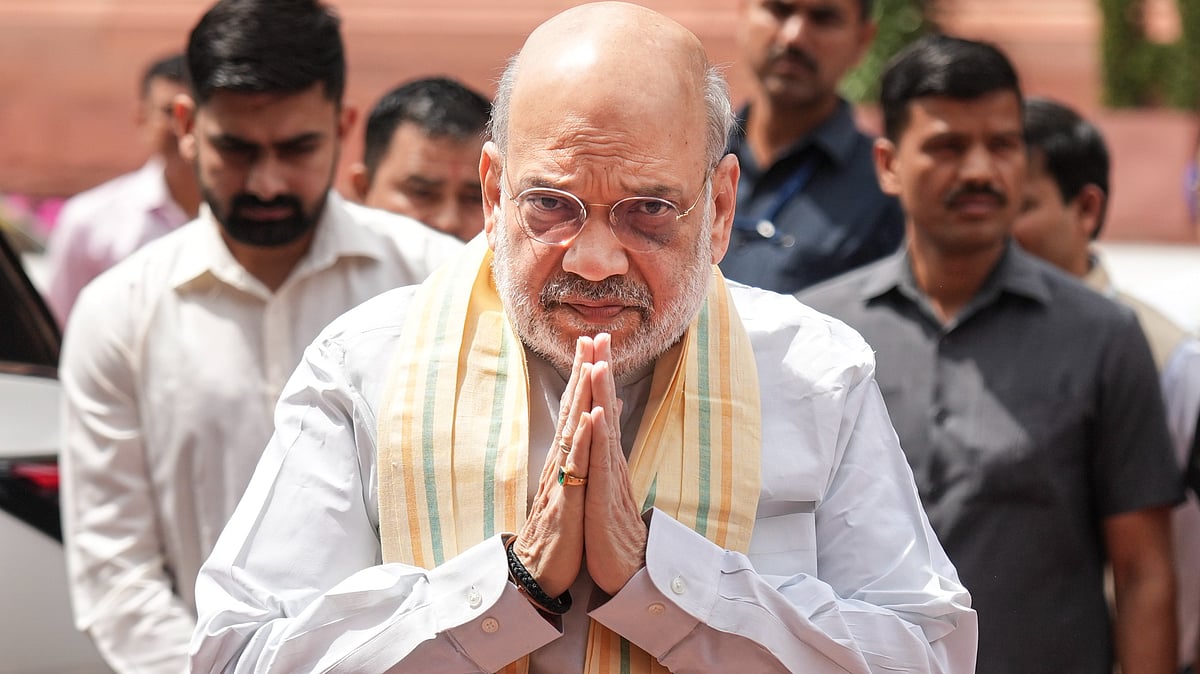
Union home minister Amit Shah’s arrival in West Bengal on Friday, 27 March comes at a politically delicate moment for the BJP: the party still cannot say, with confidence, how many seats it truly believes it can win in the 2026 Assembly election. The silence is striking — and telling.
In 2021, the BJP stormed into the campaign with the thunderous slogan 'abki baar 200 paar'. The reality was far more sobering. The party ultimately won 77 seats in the 294-member Assembly — a massive improvement on the three it managed in 2016 — emerging as the principal opposition but falling far short of power.
Five years later, the BJP’s effective strength in the Assembly has slipped to around 65 MLAs after defections and political churn, underlining the fragility of the gains it once celebrated as historic.
That experience appears to have left a deep imprint on the party’s current strategy. Even as Shah and Prime Minister Narendra Modi prepare to spearhead the 2026 campaign, the BJP is choosing caution over bravado.
The most immediate reason is the memory of public embarrassment. A big number can quickly turn into a political burden if the party falls short. In 2021, '200 paar' became shorthand for overreach after the BJP’s ambitious projection collided with electoral reality. Shah had also made confident assertions about Bengal during the 2024 Lok Sabha election cycle, but those claims did not fully translate into organisational depth on the ground — and resulted in a drop from 18 seats in 2019 to 12 in 2024.
Now the rhetoric is more restrained — but not devoid of ambition. Shah has reportedly set micro-targets, asking party workers to aim for 22 of the 28 seats in and around Kolkata. He is also said to have told cadres, “Dil pe likh lo, is baar hamari sarkar (write it on your hearts, this time it is our government)". The distinction is crucial: the BJP appears willing to sketch localised goals but is avoiding a single statewide figure that could later be used to measure failure.
Political analyst Sujit Chatterjee believes the hesitation reflects strategic caution. The party is comfortable speaking the language of momentum but wary of putting a number on record that rivals could weaponise.
Behind this caution lies a deeper organisational unease. The BJP’s Bengal unit has long grappled with factional rivalries, leadership tussles and the absence of a singular commanding state-level face. Even accounts of Shah’s internal meetings suggest repeated emphasis on unity and discipline.
“When a party is not fully united, it becomes difficult to confidently declare, ‘we will win this many seats’, because leaders themselves are not always sure who is working for whom on the ground,” Chatterjee observed.
A senior BJP functionary, speaking off the record, acknowledged the tightrope. “There is also a deeper fear inside the BJP: setting a number creates pressure. If the target is too low, the party looks weak. If the target is too high, it looks unrealistic. So the party has chosen a safer route — speak of victory, not arithmetic.”
The contrast with the ruling TMC is stark. Chief minister Mamata Banerjee has already framed the contest in numerical terms. In February 2025, she declared, “We will cross 215 seats in the next Bengal Assembly elections.” A year later, in March, she raised the pitch further: “We will win more than 226 seats.”
That contrast is politically potent. While the TMC is projecting inevitability, the BJP is still calibrating expectations. Chatterjee argues that confidence itself can function as a campaign tool. By articulating a clear numerical target, Banerjee signals organisational control and psychological advantage, while the BJP’s caution risks being read as uncertainty.
Shah’s visit — along with Modi’s expected entry into the campaign in early April — indicates that the BJP hopes to shift the electoral mood through central leadership rather than state-level projection alone. The reliance on national figures is itself revealing. When a state unit hesitates to declare a number, the central leadership often steps in to energise the narrative.
The broader challenge for the BJP is that Bengal has not become an easier political terrain despite sustained organisational investment since 2016. The party’s surge in 2021 confirmed its emergence as a principal challenger, but the inability to cross the finishing line exposed structural weaknesses. Since then, organisational gaps, candidate management frictions and leadership uncertainties have complicated its expansion strategy.
Recent analyses suggest that a number of constituencies decided by very narrow margins in 2021 could again become battlegrounds, making modest seat swings potentially decisive in 2026.
For now, realistic expectations being discussed in political circles suggest the BJP’s immediate objective is to retain or modestly improve on its 2021 tally, rather than publicly commit to a sweeping majority claim.
The BJP is avoiding numbers because numbers can expose vulnerability. The TMC is embracing numbers because numbers project command.
Join our official telegram channel (@nationalherald) and stay updated with the latest headlines