POLITICS
Bengal: BJP claims 20 TMC MPs, 50 MLAs ready to defect amid realignment talk
Saumitra Khan alleges large-scale outreach from TMC leaders as BJP signals softer stance on ‘untainted’ entrants
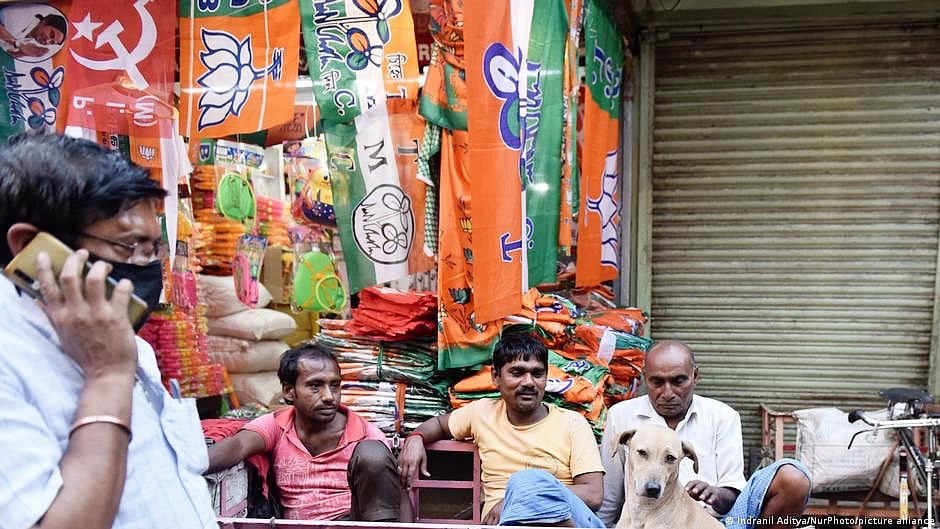
West Bengal BJP leader Saumitra Khan has claimed that around 20 MPs and 50 MLAs from the erstwhile ruling Trinamool Congress (TMC) are in touch with the BJP and are prepared to switch sides if the party leadership gives the go-ahead, fuelling fresh political speculation in West Bengal.
Khan, a three-time Lok Sabha MP, made the remarks amid growing talk of unease within the TMC following the party’s recent electoral setback in the state and visible signs of discontent among some leaders.
“Twenty TMC MPs and 50 MLAs are in touch with us. If the party leadership wants, they are ready to switch sides. If the BJP wants, the entire TMC will wind up in the next few days,” Khan told reporters, without naming any of the MPs he claimed were in contact with the BJP.
The TMC currently holds 29 of West Bengal’s 42 Lok Sabha seats. The BJP has 12, while the Congress holds one.
Senior TMC MP Sougata Roy swiftly rejected Khan’s claims, dismissing them as entirely baseless. “It is absolutely bogus, which the BJP and Soumitra Khan are feeding to reporters. Nothing of this will happen,” Roy said.
The controversy comes as the BJP in West Bengal appears to be recalibrating its stance on inducting leaders from rival parties, particularly the TMC.
State BJP president Samik Bhattacharya recently suggested that the party may now consider admitting “untainted” TMC leaders and workers into its ranks. The remarks signal a notable shift from the BJP’s position after the Assembly election results on 4 May, when leaders had publicly insisted that no opposition figures, especially from the TMC, would be welcomed into the party.
Published: undefined
Bhattacharya said the BJP’s doors would remain shut to leaders facing allegations of corruption or financial misconduct. However, he added that some individuals within the TMC had suffered politically despite raising concerns inside their own party.
“There are many people within the Trinamool Congress who, because of circumstances, could not speak openly. Some who did speak faced vindictive action. If such people knock on our doors, there is a time and a process through which the party will consider them,” he said.
He reiterated that leaders tainted by corruption allegations would not be accepted into the BJP, while suggesting that some “good people” within the TMC had become trapped by circumstances.
Political observers view the BJP’s evolving position as part of a broader strategic calculation in West Bengal. According to party insiders, many grassroots TMC workers and local leaders are uncertain about their political future and are exploring alternatives. The BJP fears that if it does not absorb at least some of these dissatisfied workers, they could drift towards the Left Front or the Congress instead.
Analysts also note that the BJP still lacks a deep organisational base in several parts of Bengal and may be looking to strengthen its booth-level network through selective inductions of influential local TMC leaders.
Political analyst Sujit Chatterjee said the BJP was attempting to build a stronger grassroots structure by bringing in local leaders with influence in their respective areas. Another analyst, Biswanath Chakraborty, said the BJP recognised that rapid expansion in Bengal would be difficult without local workers and identifiable regional faces.
The developments have also drawn attention because of the BJP’s wider political calculations at the national level. The BJP-led NDA government at the Centre continues to rely significantly on allies such as former Bihar chief minister Nitish Kumar’s JD(U) and current Andhra Pradesh CM N. Chandrababu Naidu’s TDP for parliamentary stability.
Published: undefined
Political observers say this dependence has increased the BJP’s interest in building alternative support channels in Parliament. In that context, the prospect of attracting TMC MPs assumes added significance. The calculations have gained further importance after Nitish Kumar recently moved to the Rajya Sabha and stepped down as Bihar CM, with BJP leader Samrat Choudhary taking over the post.
While the BJP and JD(U) remain partners in Bihar, sections within the BJP are said to remain wary of the JD(U)’s history of shifting alliances. Analysts believe that, in such a scenario, support from potential TMC defectors in Parliament could provide the BJP with an important political buffer.
The BJP’s recalibrated Bengal strategy has already triggered intense political discussion across the state. In recent weeks, several defeated TMC candidates and local leaders have publicly voiced frustration with their party leadership, while some have openly praised the BJP.
Following the Assembly election results, the BJP leadership had instructed party workers to avoid aggressive political mobilisation amid allegations of violence and intimidation in parts of the state. Bhattacharya had also warned that BJP workers violating party directives could face strict disciplinary action.
Now, with the BJP appearing willing to revisit its earlier position on selective inductions from the TMC, attention has shifted to which leaders might eventually cross over — and whether West Bengal is heading towards another major political realignment.
Published: undefined
Follow us on: Facebook, Twitter, Google News, Instagram, WhatsApp
Join our official telegram channel (@nationalherald) and stay updated with the latest headlines
Published: undefined