POLITICS
Ethical hacker teen Sarthak Sidhant did what ECI couldn't: Making SIR voter rolls searchable
Sarthak Sidhant and his team converted 6.8 lakh PDF files into a searchable database covering four sets of electoral rolls
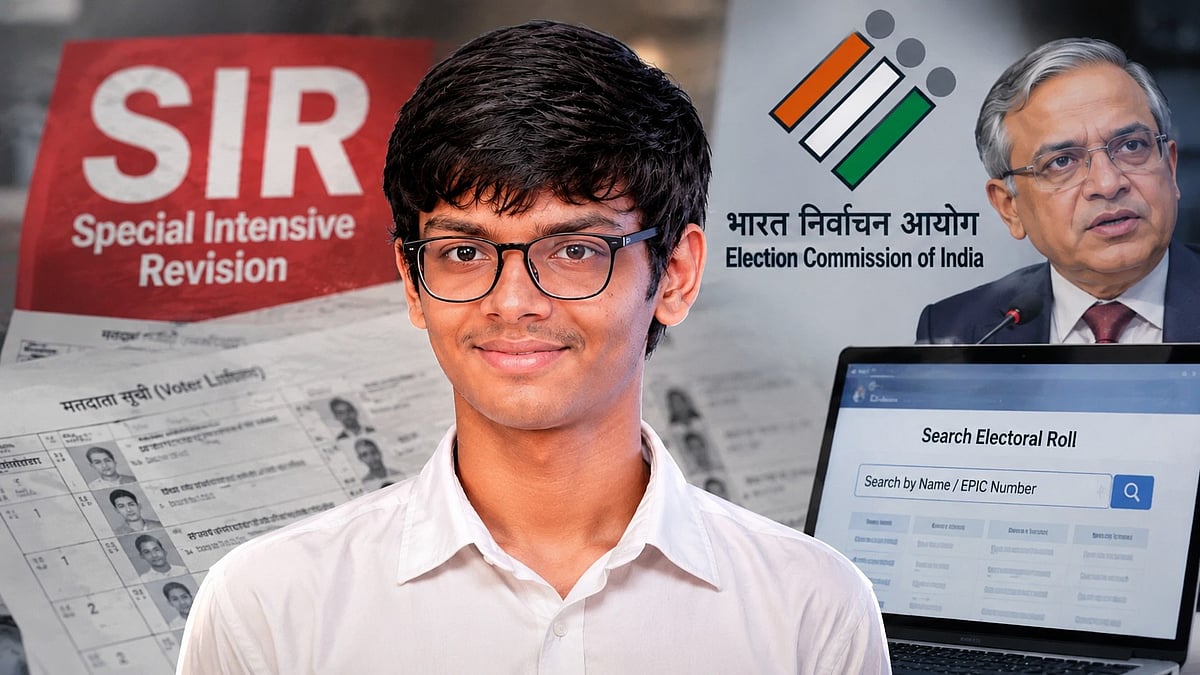
An 18-year-old ethical hacker has converted 6.8 lakh PDF files containing Uttar Pradesh's electoral rolls into a searchable database, making it easier for voters, researchers and journalists to examine voter records following the Special Intensive Revision (SIR) exercise.
Ranchi-based student Sarthak Sidhant announced on Tuesday, 24 November, that he and his team had digitised the documents, converting largely scanned, image-based files into a structured dataset covering 54.8 crore voter records across the state's 403 Assembly constituencies.
The initiative has drawn praise from opposition leaders, activists and civil society members, with some saying the Election Commission of India (ECI) should have undertaken the exercise itself.
Although the ECI had made electoral rolls available online, much of the material was published as scanned PDFs. Finding an individual's name, checking an entry or comparing voter lists across revision cycles could require downloading and manually examining several documents.
Sidhant's intervention was aimed at making these records searchable and easier to analyse.
From CBSE's OSM system to electoral rolls
This is not the first time Sidhant has scrutinised a public system where information was available but difficult to examine.
His earlier investigation began in May, after the declaration of his CBSE Class 12 results. Having noticed discrepancies in his marks, he sought scanned copies of his evaluated answer sheets and began examining the board's newly introduced On-Screen Marking (OSM) system.
By late May and early June, he was examining successive versions of CBSE's tender documents and flagging changes in eligibility criteria, technical requirements and other conditions for selecting the company responsible for the digital evaluation system.
On 2 June, he presented his findings in a seven-page document before the Parliamentary Standing Committee on Education, chaired by Congress MP Digvijaya Singh.
Later that month, on 26 June, he shared a public database containing approximately 1.66 crore government procurement records scraped from the Centre's Central Public Procurement Portal.
His inclusion in TIME100 Next India 2026 on 20 November brought further recognition to his work. Four days later, he announced the voter roll digitisation project.
How the voter roll database works
The exercise covered four sets of electoral rolls: the list used for the 2024 Lok Sabha elections, the draft and final rolls prepared during the SIR, and the 2027 draft electoral roll.
"We OCR'd every voter roll PDF that the ECI put out of Uttar Pradesh," Sidhant wrote on X, adding that his team had processed 6.8 lakh PDFs, most of them scanned documents, and converted them into 54.8 crore rows of data.
Optical Character Recognition (OCR) is a technology that converts text in scanned images into machine-readable information. It enables computers to recognise printed words and numbers rather than treating an entire page as an image.
The project also includes safeguards in the publicly downloadable files. Sensitive identifiers, including names, relatives' names, EPIC numbers and house numbers, are replaced with keyed-hash tokens. The underlying entries can still be checked against the original ECI PDFs.
The database allows users to search and compare records without having to manually inspect individual files.
'ECI should have done this'
The initiative comes amid demands from opposition parties, led by Leader of the Opposition in the Lok Sabha Rahul Gandhi, for machine-readable electoral rolls.
The Uttar Pradesh Chief Electoral Officer's office had also introduced searchable and downloadable PDFs for the 2027 draft electoral roll on 17 November. Sidhant's exercise, however, brings together four sets of electoral rolls and processes hundreds of thousands of documents into a consolidated dataset.
Congress MP Gaurav Gogoi backed the initiative, describing the work as painstaking but essential.
"I support the work done by Sarthak Sidhant. It is long and painstaking but essential. Democracy is served when citizens are vigilant and the institutions meant to serve the public are under scrutiny," Gogoi, the MP from Jorhat, posted on X on Tuesday.
Senior journalist Pankaj Pachauri also praised the effort, saying the team had undertaken work that the ECI had not.
"This is true public service. Doing Government's work because the ECI will not dare to do it," Pachauri posted on X.
From questioning his examination results to scrutinising the CBSE's digital evaluation system, opening up government procurement records and now making electoral data easier to examine, Sidhant's work has focused on using technology to improve access to public information and enable greater scrutiny of institutions.
Join our official telegram channel (@nationalherald) and stay updated with the latest headlines