POLITICS
'Internal bulldozing': Cong on Gyanesh Kumar vs election commissioners
Abhishek Manu Singhvi cites 1995 SC ruling as reminder that all ECs are equal; demands dissent notes of two ECs be made public
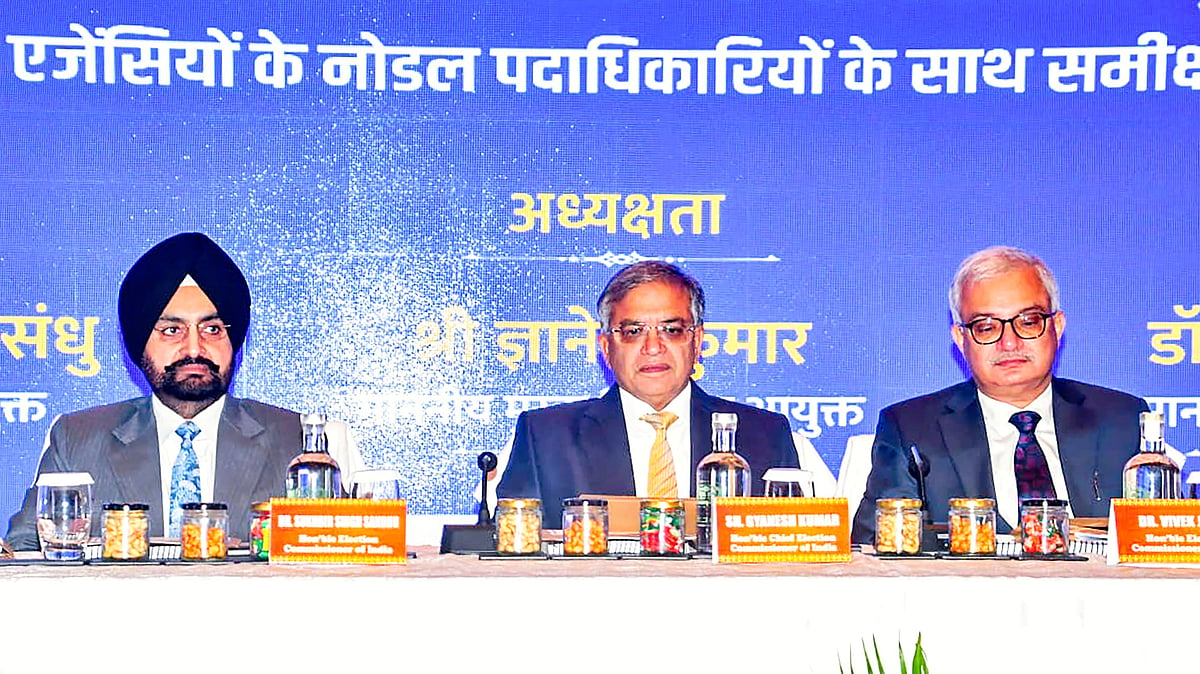
The Congress on Wednesday, 23 September launched a strong attack on the Election Commission of India (ECI) following a report by the Indian Express revealing objections raised by two election commissioners over decisions taken by chief election commissioner (CEC) Gyanesh Kumar concerning the special intensive revision (SIR) of electoral rolls. Congress alleged that the BJP had “opened an office for the murder of democracy” and demanded Kumar’s resignation.
Addressing a press conference, senior Congress leader and Supreme Court advocate Abhishek Manu Singhvi condemned Kumar’s actions, accusing him of functioning like a “feudal lord” and “hijacking” the poll panel by sidelining concerns raised by his two colleagues. Singhvi described the handling of objections as “internal bulldozing,” accusing the CEC of turning fellow commissioners into “mere puppets” and reducing their role to “futile appendages”.
Singhvi cited a 1995 Supreme Court judgment which establishes the Election Commission as a multi-member body where all three election commissioners share equal powers, with the CEC being merely the “first among equals”. He argued that Kumar’s actions undermine this constitutional principle, thereby “attacking the constitutional values of the country”.
“The Election Commission talks about one man, one woman, one vote, but here no vote has equal value,” Singhvi said. “The Supreme Court’s view that all commissioners are equal is being ignored.”
The Congress also demanded that the objections and dissent notes submitted by the two Election Commissioners be made public, rejecting the idea that they could be accessed only through RTI petitions. “We know what will happen if we rely on RTIs,” Singhvi said.
Singhvi referred to a written complaint filed in May 2026 by two Election Commissioners asserting that hundreds of Electoral Registration Officers (EROs) were unable to access the ECI’s portal because their access was restricted by the ECI’s IT department. He termed the situation “shameful and unimaginable”.
Citing data from West Bengal, Singhvi highlighted the alarming disparity between voter deletions and appeals: out of around 38 lakh deletions, only 23–24 lakh appeals were filed, with 90-95% succeeding, indicating many deletions were apparently incorrect. Meanwhile, the ECI filed 16 lakh appeals contesting the judicial orders reinstating voters.
Singhvi expressed grave concerns about the impact of SIR, warning of significant consequences for future generations. He noted that 7.8 crore voters were deleted during the first two phases of the SIR, amounting to roughly 13 per cent of the voters roll at that time. Phase 3 is ongoing in 16 states and three Union Territories, with 6.18 crore voters removed and an additional 5.43 crore marked as “suspicious” and have been issued notices for further documents.
“This process could disenfranchise the children of future voters who turn 18 in 2025, 2026 or 2027, as their parents' names have already been deleted,” Singhvi said.
Demanding Kumar’s resignation, Singhvi said the CEC “has no right to remain in his position.” He criticised the ECI’s response dismissing the objections as personal opinions rather than official dissent notes and questioned the body’s transparency and fairness.
“Based on the revelations that have come to light regarding the Election Commission, the CEC should resign," Singhvi demanded.
Responding to the Indian Express report, the ECI said in a statement that the objections raised by the two Election Commissioners were not “dissent notes” but personal opinions.
Singhvi rejected this explanation and asked: “What else can we expect from the ECI?”
Join our official telegram channel (@nationalherald) and stay updated with the latest headlines