POLITICS
Is Scindia backtracking from the ministry’s mandate on Sanchaar Saathi?
Consumers could earlier choose to download the app. Scindia says it’s still voluntary, but the ministry has ordered phone makers to pre-load it. So is the minister being truthful?
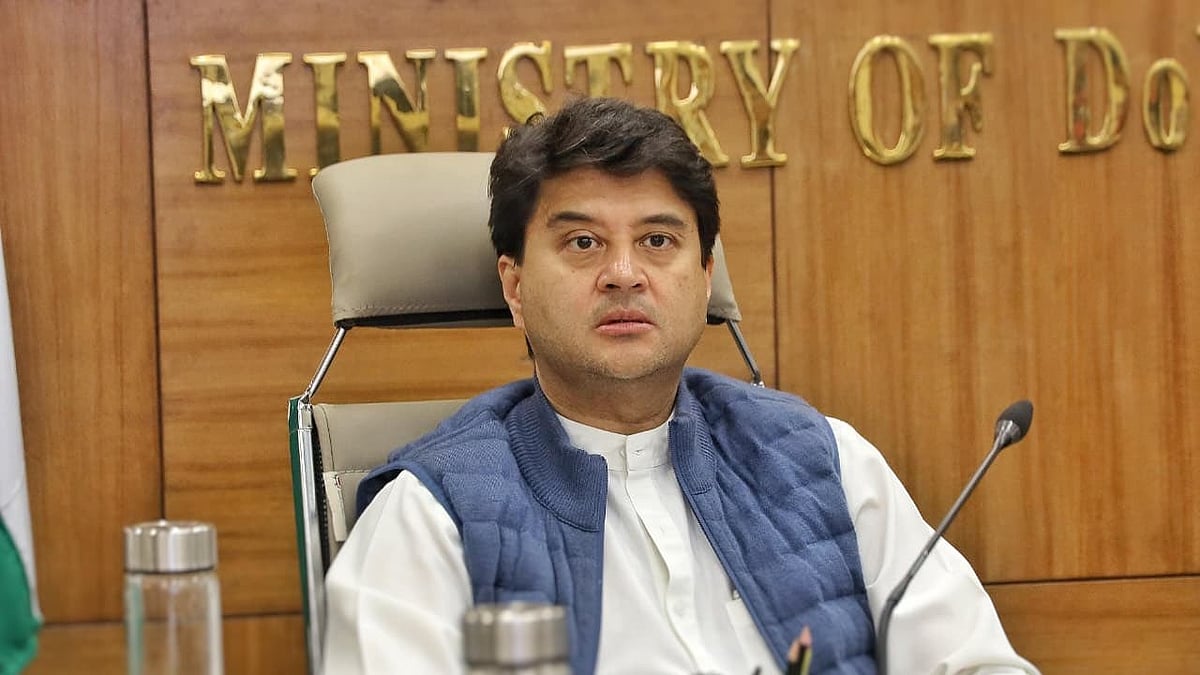
Telecom minister Jyotiraditya Scindia on Tuesday claimed that consumers were free to load the Sanchaar Saathi app or decide against it. It was entirely up to the consumers, he claimed while addressing the media outside the parliament building. Reports that the government had ordered smartphone manufacturers and importers to pre-load the app and ensure that it can never be deleted, triggered a severe backlash among activists and privacy advocates.
Is it possible that the minister was exhibiting his ignorance about the direction? Doubts arise because both Reuters and Medianama which broke the story claimed that India's telecom ministry had ‘privately’ asked smartphone makers to preload all new smartphones with a state-owned cyber security app that cannot be deleted.
The decision is being justified in view of the surge of recent cyber fraud cases including digital arrests. The directive makes no mention of ceding any discretion to the consumers—which is one of the several objections being raised.
The opposition called it an attempt by the government to turn India into a surveillance state. While Pegasus spyware was introduced in India through the backdoor in collusion with the Israeli government, this time the government is brazenly trying to pre-install a spyware, a tool of surveillance which will be privy to every call, chat and data of the users, activists pointed out. As is becoming usual with the government, no consultation was held with any stakeholder before the direction was notified surreptitiously.
The telecom minister Scindia appeared to be economical with the truth as the direction issued by the ministry makes no mention of voluntary action. It actually does not allow any discretion to either the manufacturer or the consumer. Is the minister lying or is he trying to backtrack, wondered Nikhil Pahwa of Medianama.
The November 28 order gives major smartphone companies 90 days to ensure that the government's Sanchar Saathi app is pre-installed on new mobile phones, with a provision that users cannot disable it. For devices already in the supply chain, manufacturers should push the app to phones via software updates, the ministry said in its order, which was not made public and was sent privately to select companies.
What is Sanchaar Saathi?
This is an app launched in January, 2025 by the Telecom department and is designed to help users block and track lost or stolen smartphones across all telecom networks, using a central registry. It also lets them identify, and disconnect, fraudulent mobile connections. Following more than 5 million downloads since its launch, the DoT claims that the app has helped block more than 3.7 million stolen or lost mobile phones and terminated more than 30 million fraudulent connections, reported news agency Reuters.
Why does the government want it pre-installed in all smart phones?
The government says it helps prevent cyber threats and assists tracking and blocking of lost or stolen phones, helping police to trace devices, while keeping counterfeits out of the black market. One of the world's largest telephone markets, India has more than 1.2 billion subscribers, and government figures show the app, launched in January, has helped recover more than 700,000 lost phones, including 50,000 in October alone.
What are the chances of foreign manufacturers accepting the requirement?
Foreign manufacturers of smart phones are reported to be upset at the lack of consultation. The DoT issued the directive on 28 November, days before the parliament’s winter session was to convene on 1 December. With only Russia requiring a state-sponsored app to be pre-installed since August, 2025, the reaction of foreign manufacturers and importers of smart phones in India is eagerly awaited.
Apple, which powered an estimated 4.5 per cent of 735 million smartphones in India by mid-2025, with the rest using Android, its internal policies prohibit installation of any government or third-party app. "Apple has historically refused such requests from governments," said Tarun Pathak, a research director at Counterpoint Research to Reuters and added, “It's likely to seek a middle ground: instead of a mandatory pre-install, they might negotiate and ask for an option to nudge users towards installing the app."
Statement by the Internet Freedom Foundation (IFF)
The direction by requiring manufacturers and importers of mobile handsets to pre-install the Sanchar Saathi App represents a sharp and deeply worrying expansion of executive control over personal digital devices. The stated objective of curbing IMEI fraud and improving telecom security is, on its face, a legitimate state aim. But the means chosen are disproportionate, legally fragile, and structurally hostile to user privacy and autonomy.
Clause 7(b) is the clearest expression of this. It requires that the pre-installed Sanchar Saathi application be “readily visible” and that, “its functionalities are not disabled or restricted.” In plain terms, this converts every smartphone sold in India into a vessel for state mandated software that the user cannot meaningfully refuse, control, or remove.
Viewed through the lens of the Supreme Court’s judgment in K.S. Puttaswamy (2017) that reaffirmed the fundamental right to privacy, this structure cannot pass the proportionality test. K.S. Puttaswamy requires that any intrusion into the right to privacy must meet the standards of legality, necessity, and proportionality.
Even if we assume legality and necessity for the limited purpose of checking the genuineness of devices, the order clearly stumbles on proportionality. The government’s own ecosystem already offers less intrusive means to verify IMEI numbers and detect fake handsets such as the Sanchar Saathi web portal, SMS-based KYM (Know Your Mobile) services, and USSD codes all allow a user to perform this task without a permanent app baked into the firmware…Forcing a permanent app installation for a sporadic verification function is not a marginal overreach; it is a textbook example of disproportionate state action under the Puttaswamy standard.
Today, the app may be framed as a benign IMEI checker. Tomorrow, through a server side update, it could be repurposed for client side scanning for “banned” applications, flag VPN usage, correlate SIM activity, or trawl SMS logs in the name of fraud detection. Nothing in the order constrains these possibilities.
In effect, the state is asking every smartphone user in India to accept an open ended, updatable surveillance capability on their primary personal device, and to do so without the basic guardrails that a constitutional democracy should insist on as a matter of course.
As a first step we have filed a RTI with the Department of Telecom not only for a copy of this direction/order but also the underlying justification on how and why it was issued. We will fight this direction till it is rescinded (edited excerpts from the statement).
Join our official telegram channel (@nationalherald) and stay updated with the latest headlines