POLITICS
Jan Vishwas Bill revives accountability debate as govt moves to dilute criminal penalties
Critics question timing of sweeping decriminalisation push amid concerns over regulatory dilution and corporate bias
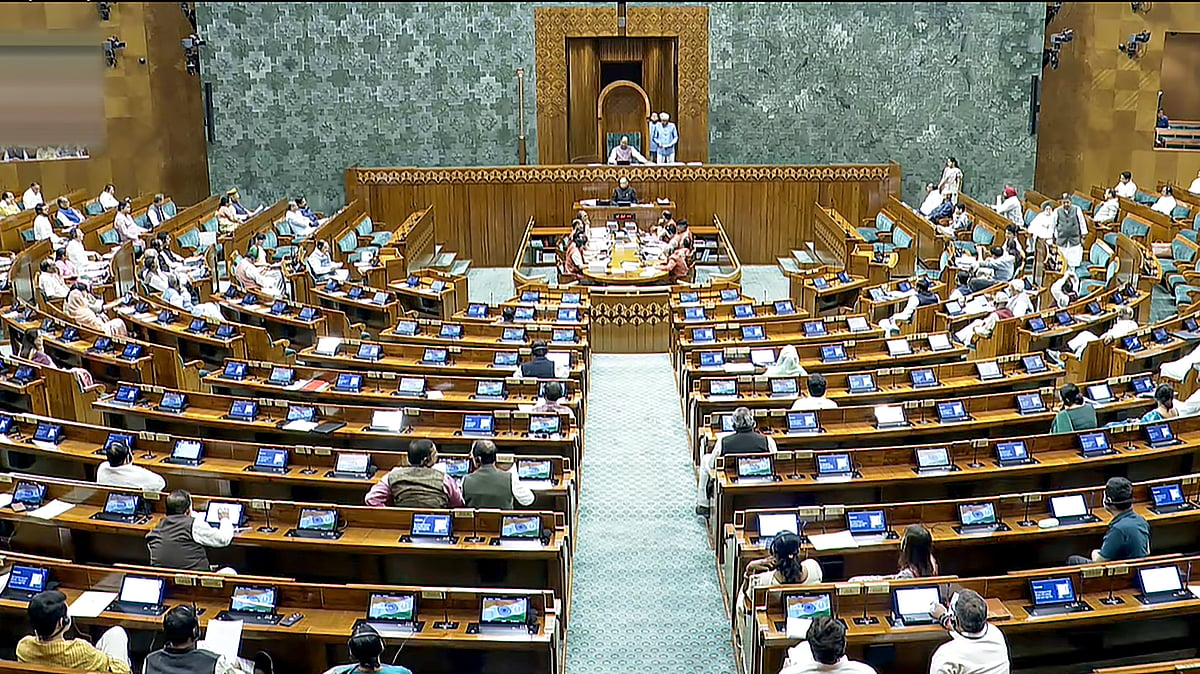
The Centre’s decision to reintroduce the Jan Vishwas (Amendment of Provisions) Bill, 2026 has reignited debate over whether the government’s push for “trust-based governance” is easing compliance burdens — or quietly weakening regulatory accountability at a politically opportune moment.
The Bill seeks to amend 79 Central laws covering 784 provisions, of which 717 are proposed to be decriminalised, replacing imprisonment clauses with monetary penalties and administrative adjudication mechanisms. The government argues the move will promote ease of doing business, reduce litigation and create a less punitive regulatory environment.
Introduced by minister of state for commerce and industry Jitin Prasada after review by a select committee, the legislation builds on the Jan Vishwas Act, 2023, which had already removed criminal liability for 183 minor offences across 42 laws.
However, Opposition MPs have warned that the Bill risks diluting deterrence across regulatory frameworks, with concerns that replacing criminal sanctions with fines could increase discretion within the administrative machinery and potentially encourage rent-seeking.
Congress MPs K. Kavya and G.K. Padavi opposed the introduction of the Bill, arguing that excessive decriminalisation may weaken institutional safeguards and calling for further parliamentary scrutiny. A dissent note was also submitted before the select committee finalised its report.
Why the government is pushing the Bill now
The timing of the legislation is significant. The Jan Vishwas framework has become a key pillar of the government’s broader regulatory reform narrative centred on reducing compliance burdens and improving India’s investment climate. The Union Budget 2025–26 had already signalled Jan Vishwas 2.0, an expansion of the earlier decriminalisation exercise.
Policy analysts note that the government has increasingly emphasised reducing regulatory friction to attract investment, especially as India seeks to position itself as a manufacturing alternative in shifting global supply chains.
The Bill also aligns with the government’s stated aim of removing thousands of compliance requirements and reducing the fear of criminal prosecution for procedural lapses, particularly among MSMEs and startups.
At the same time, critics argue the push reflects pressure to demonstrate reform momentum amid uneven private investment and persistent concerns over regulatory unpredictability.
The withdrawal of the earlier version of the Bill earlier this month to incorporate select committee recommendations indicates that the government is keen to fast-track a politically marketable reform while managing legislative resistance.
Core criticism: dilution disguised as reform?
Critics say the scale of decriminalisation — spanning dozens of laws and hundreds of provisions — raises questions about whether administrative penalties alone can ensure compliance in sectors affecting public safety, labour protection and consumer rights.
Legal experts have also flagged inconsistencies in penalty frameworks across laws, noting that similar offences may continue to attract different levels of punishment, potentially undermining the stated objective of regulatory clarity.
Another concern relates to the expansion of delegated powers allowing authorities to determine penalties through subordinate legislation, which some analysts view as excessive delegation without adequate parliamentary oversight.
Critics argue that while procedural lapses may not merit imprisonment, blanket decriminalisation risks signalling regulatory leniency at a time when enforcement capacity remains uneven.
There are also apprehensions that large firms with deeper financial resources may treat monetary penalties as a cost of doing business, weakening deterrence while disproportionately affecting smaller players.
Continuity with earlier deregulation push
The Jan Vishwas framework reflects a broader shift in regulatory philosophy from criminal enforcement toward civil penalties, with similar legislative exercises already undertaken by several states.
State-level versions of Jan Vishwas laws have removed criminal provisions for minor compliance lapses related to licensing, filing delays and technical violations in sectors such as labour, industry and municipal governance.
Supporters of the reform argue that India’s regulatory structure still contains legacy provisions dating back decades, many of which criminalise technical lapses without involving fraud or public harm.
Opponents counter that the government has yet to demonstrate how administrative penalties will ensure accountability in the absence of strong enforcement mechanisms.
With PTI inputs
Join our official telegram channel (@nationalherald) and stay updated with the latest headlines