POLITICS
Youth protest: CJP hardens stance, sets 24-hour deadline for Pradhan's exit
The two sides are scheduled to meet again on Saturday for the next round of talk
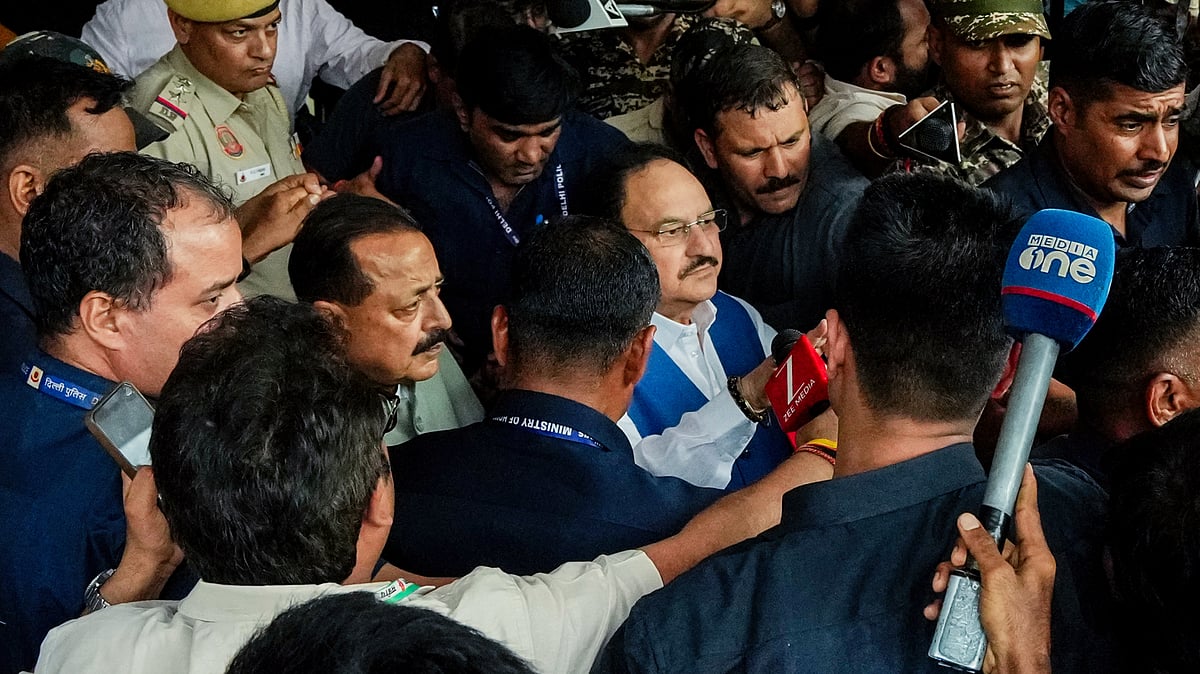
The CJP on Friday hardened its stand on the resignation of Union education minister Dharmendra Pradhan after a nearly two-hour meeting with government representatives at the Constitution Club of India failed to produce a breakthrough on its principal demand. The two sides are scheduled to meet again on Saturday, 25 July.
In a politically significant departure from the previous round of talks, the meeting was held at CCI instead of the residence of Union minister and former BJP president J.P. Nadda.
Political observers viewed the shift to a neutral venue as a sign that the government was willing to engage on more equal terms, even as differences over Pradhan's resignation remained unresolved.
The government was represented by Nadda and fellow Union minister Jitendra Singh, while the CJP delegation was led by its national spokespersons Saurav Das and Ashutosh Ranka.
Briefing reporters after the meeting, Ranka said the government had agreed in principle to two of the organisation's demands — Rs 1 crore compensation for the families of NEET aspirants who died by suicide and withdrawal of FIRs and other legal cases against students participating in the protests.
"The government has asked for time till tomorrow afternoon on our demand for Dharmendra Pradhan's resignation," Ranka said.
Clearly, no consensus could be reached on the CJP's central demand for Pradhan's resignation.
During the meeting, the CJP submitted a memorandum reiterating that its key demands were "non-negotiable".
"We have arrived at a clear consensus that our demands — the resignation of Mr Dharmendra Pradhan, Rs 1 crore compensation for NEET victims, and no legal action against protestors — are non-negotiable. Furthermore, the Government of India, the head of the Rapid Action Force and the Delhi Police Commissioner ought to publicly apologise to the students who were brutally thrashed by their forces," the memorandum stated.
By setting Saturday afternoon as the deadline for the government's response, the CJP has further escalated pressure on the Centre over Pradhan's future. The organisation has warned of intensifying its agitation if the minister is not removed.
The CJP's hardened position also marks a departure from that of activist Sonam Wangchuk, who recently ended his 26-day fast without making Pradhan's resignation a precondition. It underscores the differences between the CJP's negotiating position and the understanding of Wangchuk vis-à-vis a resignation of the Union education minister.
Notably, Pradhan's resignation has remained the focal point of the month-long student agitation led by the CJP at Jantar Mantar. Congress has also said that his resignation is non-negotiable.
The developments came a day after Prime Minister Narendra Modi, in a video message, said the government was working on bringing legislation to curb the examination paper leaks.
While the text of the proposed Bill has not been made public, the Union Cabinet on Friday approved amendments to the anti-paper leak law providing for stricter penalties.
The proposed legislation prescribes imprisonment of up to 10 years and fines of up to Rs 10 crore for those involved in examination paper leaks. The amendments also seek to increase the minimum sentence for those convicted in such cases from the existing three years to five years.
Join our official telegram channel (@nationalherald) and stay updated with the latest headlines