POLITICS
Kolkata stampede: Arrests of ‘small fry’, AITC leader fuel row over accountability
MLA Kunal Ghosh alleges selective policing, arrests of AITC leader and two announcers intensify scrutiny of accountability for 19 deaths
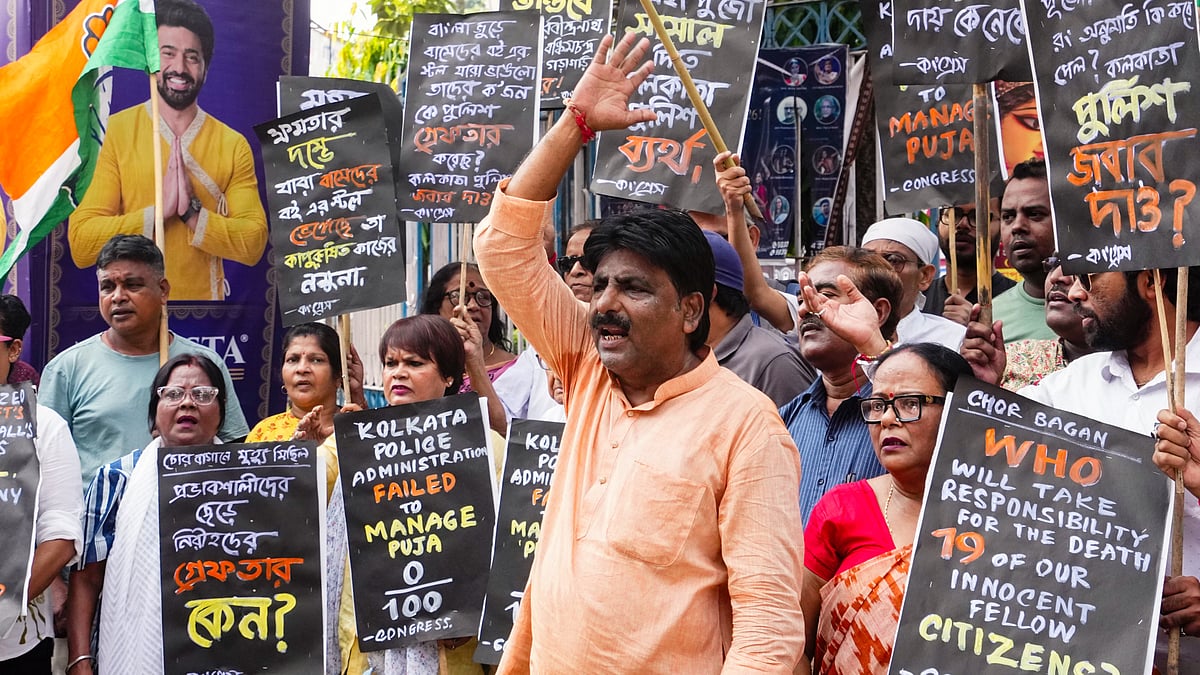
Mamata-AITC MLA Kunal Ghosh accuses police of targeting party leaders and workers who questioned influential figures after Chorbagan tragedy.
Two announcers arrested over claims that pandal was collapsing; arrestee's wife alleges Puja committee members instructed him to make announcement, later told him to hide.
Forensic findings raise questions about ventilation and crowd safety as high court-directed SIT investigates deaths.
The arrest of Mamata-AITC leader Majid Ansari in a three-year-old case has triggered a political confrontation in Kolkata, with party MLA Kunal Ghosh accusing the police of targeting those who have questioned influential figures following the deadly Chorbagan Puja mandap tragedy on 17 October.
As Ghosh staged a sit-in outside a police station to protest Ansari’s arrest, the detention of two announcers who allegedly declared that the mandap was collapsing has added to questions over whether those at the lower end of the chain of events are being held accountable while the role of the Puja organisers and other influential figures remains under scrutiny.
Ansari was arrested by officers of Amherst Street police station on Friday, 23 October in connection with a case registered in 2023. According to police sources, he faces allegations of molesting a woman, intimidating her and demanding Rs 20 lakh while threatening to circulate intimate photographs of her online. Ten other people were also named in the case.
Ansari, however, has claimed that his arrest is linked to his criticism of the BJP and his stand following the Chorbagan tragedy, in which 19 people died, at least officially.
Protesting the arrest, Ghosh staged a sit-in on the steps of Amherst Street police station. He alleged that police were targeting Mamata-AITC leaders and workers who had protested the tragedy and demanded action against members of the puja committee. “People are being picked up on false charges, while the real culprits remain free,” Ghosh said.
In a social media post, he accused the state government of using the police to silence dissent within the Mamata-AITC. 'The government is using the police to harass and arrest — through old or fabricated cases — those within the Trinamool Congress who have protested or raised questions about the involvement of influential figures in the Chorbagan incident,' he wrote.
Ghosh further alleged that Jorasanko and Amherst Street police stations were being used to target protesters. 'Instead of going after the masterminds behind the Chorbagan tragedy, the police are working to silence those who are speaking out,' he said.
BJP MLA Sajal Ghosh dismissed the protest, saying, “If someone commits a wrong, action will be taken against them. If anyone is arrested unjustly, the courts will look into it. Why all this agitation?”
The confrontation escalated when BJP supporters gathered outside the police station, accusing Kunal Ghosh of protecting “anti-nationals” and demanding that he leave the premises. They also called him a “traitor”. The officer-in-charge later escorted Ghosh inside the police station.
The political row comes amid growing scrutiny of the arrests made in connection with the Chorbagan tragedy, particularly those of two announcers, Sentu Saha and Babu Majumdar, popularly known as Kalia, who allegedly announced that the puja mandap was about to collapse.
Investigators are examining the circumstances surrounding the announcement and the panic that reportedly followed. Kalia’s wife Koel has alleged that members of the puja committee instructed her husband to make the announcement and later advised him to go into hiding.
According to Koel, Kalia works as an app cab driver and has been associated with Chorbagan club for more than 18 years. She said he was not usually responsible for microphone announcements because he struggles to express himself clearly. However, she alleged that club members instructed him to announce that the mandap had collapsed and he complied because he feared the situation could deteriorate.
Koel said her husband briefly returned home after the incident before leaving to help with rescue efforts, leaving his mobile phone behind. The following morning, he contacted her and reportedly explained that some committee members had told him not to appear in public before 27 October.
Koel said Kalia was uncomfortable with the instruction but initially followed it and went into hiding. She alleged that he eventually decided to surrender because he believed he had done nothing wrong. She believes his interrogation could establish who instructed him to make the announcement and who subsequently advised him to disappear.
Meanwhile, forensic experts have examined the Chorbagan puja mandap to determine whether inadequate cooling and ventilation contributed to the deaths. Preliminary post-mortem findings reportedly indicated that several victims died from asphyxiation, raising questions about conditions inside the crowded structure.
Sources said 24 air-conditioning units, with a combined cooling capacity of 134 tons, were operating inside the mandap. Preliminary assessments suggest that, although the units were functioning, they may not have been sufficient to cool such a large enclosed space packed with visitors.
The findings have raised questions about whether the organisers and authorities adequately assessed ventilation, crowd capacity and emergency arrangements before the puja.
If the cooling system was insufficient for the number of people inside, why was the risk not identified earlier? Were crowd-control measures adequate to prevent a deadly build-up of people in an enclosed space? These questions remain central to establishing what happened and whether the tragedy could have been prevented.
Following a directive from Calcutta High Court, the state government constituted a special investigation team headed by retired Justice Anindita Roy Saraswati. The team includes senior government and police officials and has been asked to submit its report within three months.
Join our official telegram channel (@nationalherald) and stay updated with the latest headlines