POLITICS
What can ASP-AIMIM alliance deliver in UP assembly elections in February 2027?
Parties vie for Uttar Pradesh’s Dalit vote as SP–Congress appears best placed and the BSP fights for survival amid the Azad–Owaisi tie-up
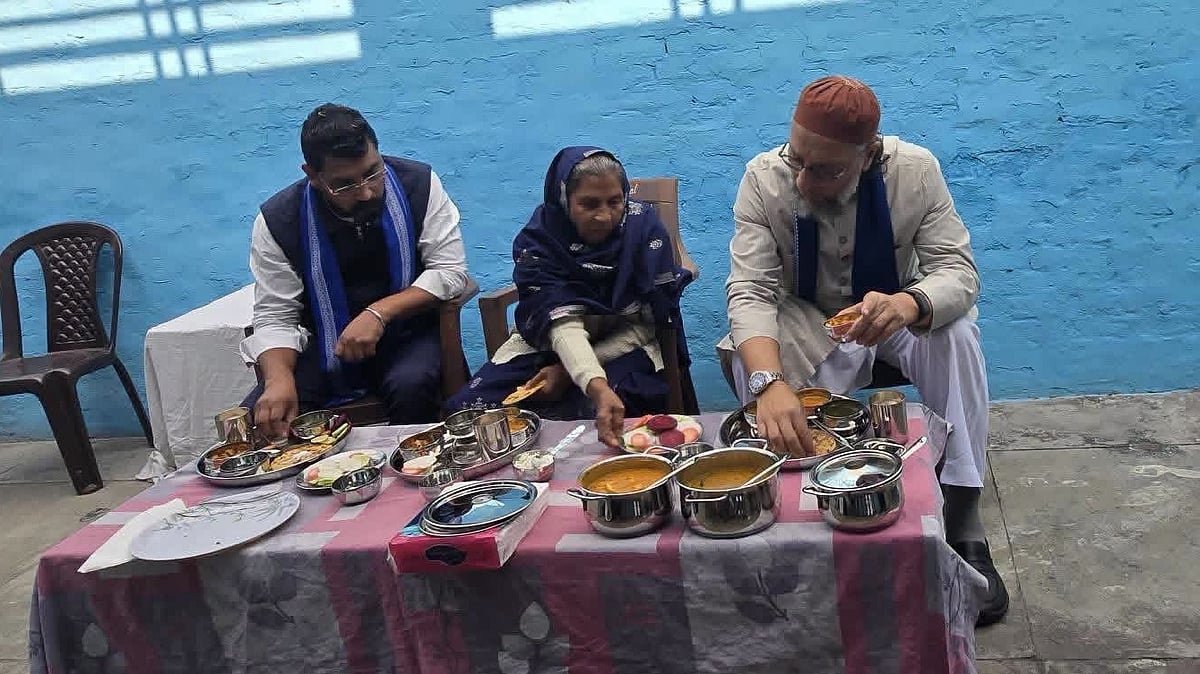
Muslims and Dalits together constitute roughly 40 per cent of voters but are dispersed across Uttar Pradesh and hence the scramble to mobilise them before the February 2027 assembly polls
The combined vote share of ASP-AIMIM in 2022 was just 1.26 per cent compared to 32 per cent of the SP and 12 per cent of the BSP
BJP’s tally in the last three assembly elections has been 47 (2012), 312 (2017) and 255 (2022) in the 403-member House
It was an eventful fortnight in November. BSP chief Mayawati announced that a huge rally would be held on 6 December in Lucknow to heraldthe party’s ‘Mission 2027’. Days later Chandrashekhar Azad and Asaduddin Owaisi announced an electoral alliance to bring together Dalits and Muslims while the Samajwadi Party followed with a massive Dalit rally in Agra, believed to be a BJP bastion.
Analysts speculated if the formation of the Samajik Parivartan Morcha, as the electoral alliance between Azad Samaj Party (Kanshiram) and All India Majlis-e-Ittehadul Muslimeen (AIMIM) has been named, poses more threat to the Samajwadi Party or the BSP, both of which could lose Dalit and Muslim voters to the Morcha, who together constitute approximately 40 per cent of the voters in UP and are indeed crucial in the assembly election due around February 2027.
On paper at least and judging by the results of past elections, the threat does not appear to be great. In the 2022 Assembly elections, Azad Samaj Party contested 111 seats and secured around 0.77 per cent of the votes, while AIMIM contested 95 constituencies and received approximately 0.49 per cent. Their combined vote share was about 1.26 per cent and neither won a seat. The Samajwadi Party in contrast polled 32 per cent votes and won 111 seats in the assembly. Even the Bahujan Samaj Party secured around 12 per cent votes and won a solitary seat. The Congress, which won two seats, also polled more votes than ASP and AIMIM together.
Prof Ravikant Chandan too feels the Morcha is unlikely to draw a large enough chunk of Dalit and Muslim voters. Conceding the potential of Azad Samaj Party to make inroads into the BSP's support base, particularly among young Jatavs, he points out that both Dalits and Muslims are yearning for change and for a viable alternative to the BJP.
Activists Arun Khote and Manish Sharma also believe Dalit voters will prioritise a change of government over establishing a new political formation. They however suggest inclusion of the new formation in the INDIA bloc to prevent division of opposition votes. Political commentator Sheetal P. Singh too warns against underestimating the new alliance. Azad, he argues, could well emerge as an alternative to Mayawati for a large section of Dalit voters.
Attacks on Dalits by dominant backward communities including Yadavs, had indeed led Dalits to drift away from both BSP and the SP. Mayawati and Akhilesh Yadav were accused of not taking exemplary action against the culprits. They were also accused of not being visible enough on the ground and not doing enough to protect Dalit victims. Muslims in UP too have nursed similar grievances. It remains to be seen if renewed attempts to assuage them bear fruit.
BJP’s Dalit outreach can be traced to the 1990s. BJP leaders made a grand show of having meals in Dalit households to debunk the perception of their upper-caste bias. They identified Dalit icons and deities worshipped by smaller communities and set out to honour them and observe festivals. This coincided with Dalits’ disenchantment with the BSP and SP. The RSS embracing them as Hindus convinced many of them to switch loyalties as it promised them upward mobility on the rigid caste hierarchy.
A decade since 2014, the electoral picture has changed. BJP’s seats in the assembly in the last three elections in 2012, 2017 and 2022 has been 47, 312 and 255. In the last three Lok Sabha elections in 2014, 2019 and 2024, BJP won 71, 62 and 35 seats in the state. In 2024, the BJP struggled to win 33 seats while the Samajwadi Party (SP) bagged 37 Lok Sabha seats and Congress six. Together, the INDIA alliance partners won 43 seats. The result indicated a shift in the state's electoral equation, with sections of Dalit voters appearing to move towards the opposition amid concerns over attacks on the Constitution and doubts about BJP’s stand on reservation.
Those doubts have deepened since then. BJP has continued to fiddle with Constitutional safeguards. It has wavered on its own UGC guidelines. Its record on SC-ST Act is mixed, if not abysmal. The BJP governments at the Centre and in UP stand accused of denying jobs to Dalits by keeping posts reserved for them vacant. The Government’s own NCRB data show an increase in atrocities against Dalits.
What is more, since 2022 Rahul Gandhi’s acceptance as a national leader has grown. The 2024 result reflected the shift and the SP is seen to have benefitted from its alliance with the Congress. Sections within the two parties may believe that they would be better off if they contest separately but past results do not support such hubris. The Congress needs SP for the arithmetic while the SP needs the Congress for its chemistry with the electorate and the pull that Rahul Gandhi exerts among Dalits, Muslims and the youth. Chhatron Ki Goonj in Prayagraj was a success despite the obstacles put by the administration, forcing a Congress leader to lament the decision to end the interaction in less than two hours.
Join our official telegram channel (@nationalherald) and stay updated with the latest headlines