POLITICS
Women voters drive record turnout in Tamil Nadu and West Bengal polls
Provisional figures—excluding service and postal ballots—show record turnout, unlike lower participation in Gujarat and Maharashtra bypolls
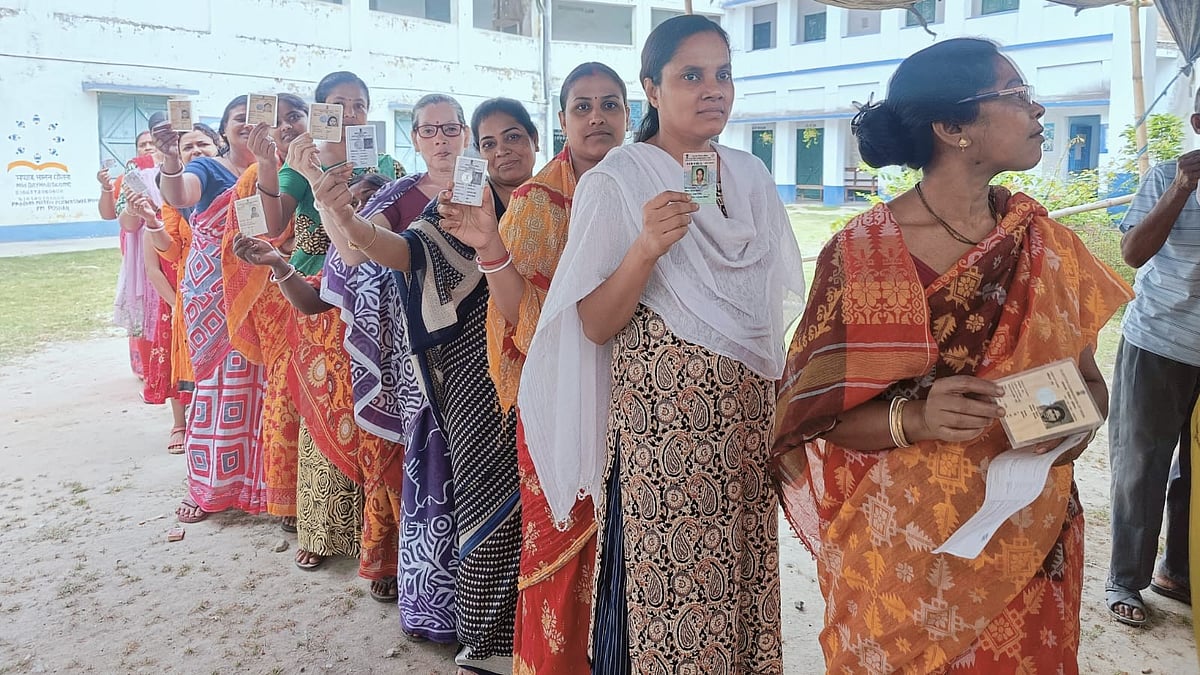
A record surge in voter participation was reported by the Election Commission of India during the 2026 Legislative assembly elections in Tamil Nadu and the first phase of polling in West Bengal, signalling a notable moment in India’s democratic trajectory.
Polling commenced at 7:00 am on 23 April across both states, alongside by-elections in select constituencies in Gujarat and Maharashtra. Election authorities deployed extensive monitoring systems and voter facilitation measures to ensure a smooth process.
Tamil Nadu recorded a turnout of 84.69 per cent by 5 pm, exceeding its previous high of 78.29 per cent set in 2011. Notably, female voter participation reached 85.76 per cent, surpassing male turnout at 83.57 per cent. This marks a significant rise from recent elections, with turnout figures of 73.63 per cent in 2021 and 70.14 per cent in the 2024 Lok Sabha polls. The data point to a renewed wave of public engagement, particularly among women.
Historically, voter turnout in Tamil Nadu has fluctuated, with moderate participation in the decades following Independence before rising steadily from the late 20th century. The 2026 figures represent the highest level of electoral participation recorded in the state.
West Bengal’s Phase-I polling saw an even higher turnout of 91.78 per cent by 5 pm, surpassing its previous peak of 84.72 per cent in 2011. Female voters again led the trend, recording 92.69 per cent participation compared to 90.92 per cent among men. The figures reinforce a broader pattern of strong female electoral engagement.
The state, known for consistently high turnout levels, has seen participation grow from around 50 per cent in the early post-Independence years to over 80 per cent since the 1980s. The latest figures indicate both continuity and a sharp increase in voter mobilisation.
According to officials, the elections were conducted on a vast logistical scale. More than 9.33 crore voters across both states were served through over 1.19 lakh polling stations, staffed by nearly six lakh personnel.
Tamil Nadu accounted for 234 Assembly constituencies and over 5.7 crore voters, while West Bengal’s first phase covered 152 constituencies with around 3.6 crore electors.
To enhance transparency, the Commission implemented 100 per cent live webcasting of polling stations, enabling real-time monitoring by Chief Election Commissioner Gyanesh Kumar and fellow Election Commissioners S. S. Sandhu and Vivek Joshi. Polling data were uploaded promptly via the ECINET platform to streamline reporting.
Although the turnout figures remain provisional and do not include service voters or postal ballots, officials say they already reflect an unprecedented level of participation.
In contrast, by-elections in Gujarat and Maharashtra recorded comparatively lower turnout. Constituencies such as Umreth in Gujarat saw 59.03 per cent participation, while Baramati and Rahuri in Maharashtra reported 57.48 per cent and 55.31 per cent respectively by 5 pm. Despite their smaller scale, these contests still demonstrated steady voter engagement.
With IANS inputs
Join our official telegram channel (@nationalherald) and stay updated with the latest headlines