Opinion
Kerala local body elections 2025: a wake-up call for decentralised, accountable governance
The Left Democratic Front’s electoral setback signals voter impatience with centralisation and underscores importance of grassroots responsiveness, women’s leadership and local issue-based politics
Local body elections in most states are treated as rehearsals for the assembly election. In Kerala, they are moral audits. Welfare here is not abstract. It is tangible. A pension delivered on time. Waste collected without humiliation. Roads repaired before the monsoon. Panchayats are the bloodstream of governance. Municipalities and corporations are its loudspeakers.
For decades, the Left Democratic Front’s greatest strength lay in demonstrating that decentralisation was not just a policy but a political ethic. The People’s Plan Campaign, participatory budgeting, neighbourhood committees, and mass literacy around governance created a sense of citizen-centric administration.
That legacy has not disappeared. But with the 2025 verdict the LDF’s long-standing hold over Kerala's grassroots has been challenged decisively, with the United Democratic Front (UDF) emerging as the single largest front, leading in over half of the grama panchayats and municipalities. Even more impactful was the Bharatiya Janata Party’s (BJP) breakthrough in securing control of the Thiruvananthapuram Corporation, a critical foothold in a state where it has struggled politically.
Officially, the LDF leadership framed the verdict as a mid-term correction, arguing that local outcomes do not necessarily play out in Assembly elections. Yet beneath that composure, the unease over Chief Minister Pinarayi Vijayan’s style of governance was visible
Across districts, ward-level conversations revealed a recurring theme. A perception of centralisation. A sense that authority had become command-oriented, intolerant of dissent, impatient with questioning. Local elections amplify such perceptions because they are fought not on ideology alone, but on daily interactions with the state. Transfers. Disciplinary actions. Police conduct. Bureaucratic silence. When citizens experience governance as unapproachable, resentment finds electoral expression.
The Sabarimala issue cast its shadow on the campaign. But its electoral impact in 2025 was less about religious polarisation and more about fatigue. Voters appeared weary of unresolved conflicts. Allegations like the Sabarimala gold controversy, even when contested or legally disputed, added ethical clutter and eroded the Left’s technocratic clarity.
For the BJP, capturing the Thiruvananthapuram Corporation marked a milestone. It offered administrative visibility and symbolic legitimacy in a state where power has long eluded the party.
Yet the rest of the map told a more cautious story. In Palakkad municipality, the NDA retained power for a third consecutive term but won only 25 of 53 seats, falling short of a majority. Governance there will depend on fragile alliances. Elsewhere, despite incremental vote share growth, the BJP failed to convert support into control.
***
The election also highlighted the rising influence of women leaders—empowered by 50% reservation and grassroots bodies like Kudumbashree — who framed discourse around dignity, workplace ethics and social accountability. Thousands of its members contested and won seats, bringing administrative literacy, social networks, and problem-solving experience into councils.
In districts like Idukki and Wayanad, farmers’ anxieties cut across party lines. Rubber prices, wildlife attacks, delayed compensation, and failing rural infrastructure became decisive issues. When farmers organised night vigils from tree huts to protect paddy fields from wild boars and elephants, they were not staging protest theatre. They were articulating a judgment on the state’s protective capacity.
Farmer collectives demanded written assurances from candidates and threatened boycotts. Such gestures rarely remain local. They signal a breakdown in trust that no manifesto can repair overnight.
The elections were held in two phases on 9 and 11 December, with counting on December 13, across 1,199 of Kerala’s 1,200 local bodies. The contest spanned 941 grama panchayats, 152 block panchayats, 14 district panchayats, 86 municipalities, and six municipal corporations. In Kerala, these are not ornamental bodies. They are where the state is encountered daily, where welfare either arrives or fails, where citizens learn whether democracy listens.
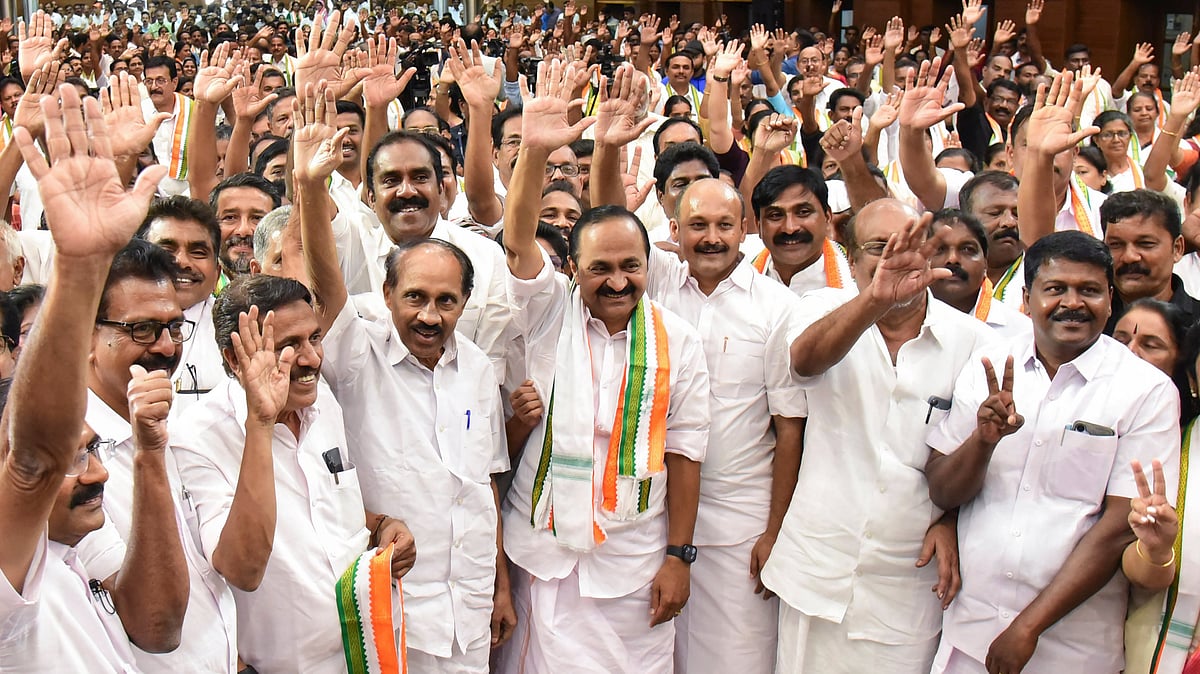
Across tiers, the UDF emerged as the single largest front. It led in a majority of gram panchayats and municipalities, effectively ending the LDF’s long-standing grassroots dominance. The UDF won 54 of the 86 municipalities, while the LDF won only 28. The NDA secured only two. The corporation results were even more politically resonant. The UDF captured four of the six corporations: Kochi, Kollam, Thrissur and Kannur. The LDF retained Kozhikode. The NDA wrested Thiruvananthapuram Corporation, delivering the most psychologically disruptive blow to the Left.
For the Left, the discomfort lay not just in the losses but in where they occurred. Panchayats in central Kerala, semi-urban municipalities in Malabar, and coastal wards once considered ideologically reliable are slipping away. The Congress recorded upset victories in pockets of Alappuzha, Ernakulam, Thrissur, Malappuram and Kannur, regions where the Left’s everyday organisational presence had traditionally capped opposition growth.
For political actors beyond Kerala, this verdict underscores a crucial lesson: effective governance must be earned repeatedly through transparency, responsiveness, and consistent engagement at the local level.
Join our official telegram channel (@nationalherald) and stay updated with the latest headlines