Opinion
Not all murders deserve the same punishment
In a murder case, collecting evidence and securing testimony is the responsibility of the police. In the Akhlaq case, the state is effectively admitting that it has failed to do so
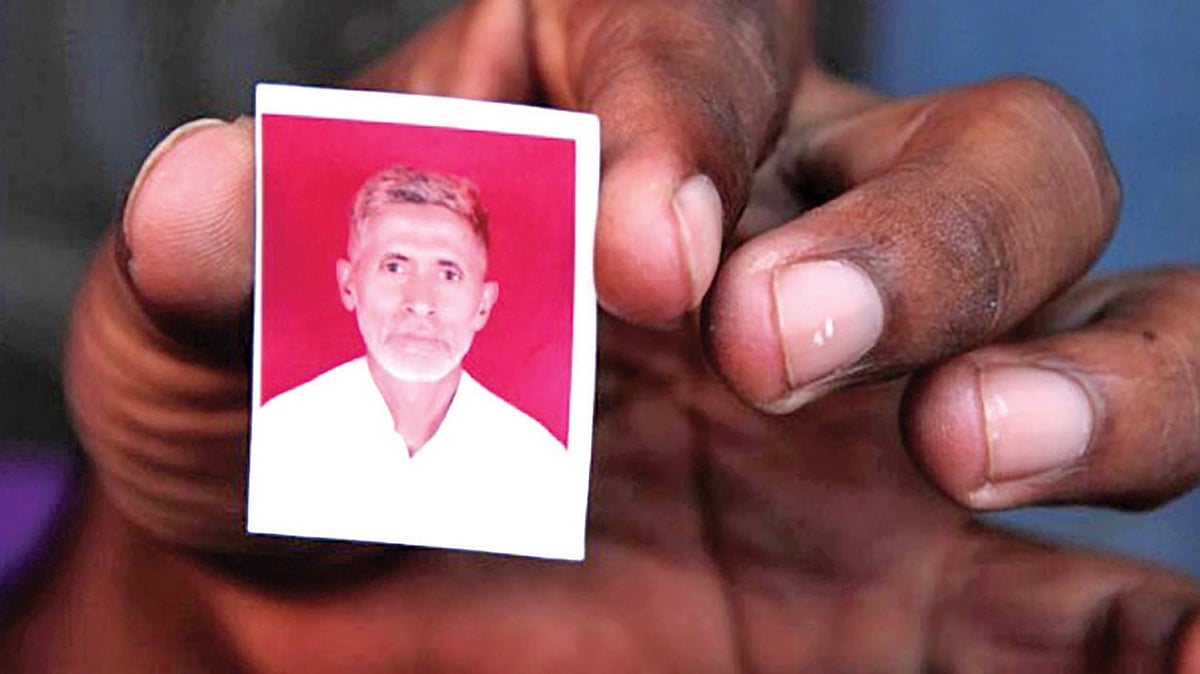
The family of Mohammad Akhlaq has challenged the Uttar Pradesh government’s application seeking withdrawal of prosecution against the accused in Akhlaq’s murder. A Noida court has accepted this application. Akhlaq’s family has asked a simple question: is beating a man to death with sticks a less serious crime? They were forced to ask this because the government has downgraded the gravity of the offence by arguing that no weapons were recovered from the accused.
The government also argued, in defence of the murder accused, that the crime should not be treated as particularly serious because there was no personal enmity between the accused and Akhlaq. Its principal argument for withdrawing the case is that doing so would help maintain social harmony.
But beyond all this, the government has said something else that deserves closer scrutiny. It said the meat recovered from Akhlaq’s house was beef. This ‘fact’ was introduced to suggest that the accused did not kill Akhlaq without a valid reason. They attacked him because they suspected there was beef in his house. In other words, he was killed in the service of faith.
Akhlaq had committed the gravest sin, and his Hindu neighbours awarded him the death penalty for it—a punishment that, in the government’s eyes, is excusable. It should not even be counted as a crime. The government was not merely stating the cause of the murder—it was attempting to justify it.
At the previous hearing, the court asked the government whether there was any precedent for withdrawing a murder case. What it asks next remains to be seen. The court’s final decision will also tell us whether Manusmriti has now been formally implemented in India or not.
While reviewing the government’s outlook in the Akhlaq murder case, it wouldn’t be amiss to compare its stance—and the court’s—on another killing in a different part of Uttar Pradesh. A court in Bahraich recently sentenced a Muslim man, Sarfaraz, to death. He was accused of shooting dead a Hindu man named Ram Gopal Sharma. The incident took place a year ago.
In October 2024, during a Durga Puja procession, an aggressive Hindu mob was seen raising slogans outside Sarfaraz’s house. From within that crowd, Ram Gopal Mishra suddenly entered Sarfaraz’s house. Shouting slogans in a frenzy, he climbed onto the roof, started tearing down a flag tied to the railing, then broke the railing itself. A shot was now fired and he was killed.
If someone force-enters my house, vandalises it, and poses a threat to my safety, I should arguably have the right to self-defence—especially when the police are doing nothing to restrain the violent mob or to stop the intruder. The death is unfortunate, but how justified is it to describe firing at one’s attacker as an act of terror?
In this case, justice was delivered within a year. The government sought the harshest punishment—the death penalty—and the court, citing Manusmriti and the need to instil fear among the people, awarded Sarfaraz the death sentence.
There is a striking similarity in the cases of Akhlaq and Sarfaraz. Both their homes were attacked. In Akhlaq’s case, announcements were made from the village temple near his house to assemble the mob. Villagers gathered with the intent to attack Akhlaq in his house. They planned the assault, dragged him out of his house, and beat him to death in broad daylight.
This was not a killing committed in a moment of rage; it was no emotional outburst. It was a cold-blooded, premeditated attack. It was designed to strike terror in the hearts of Muslims—and it did. Muslims no longer feel certain about when their neighbours might barge into their homes, inspect their refrigerators and kitchens, accuse them of anything at all, and kill them. Since Akhlaq’s murder, many Muslims have been beaten to death on similar pretexts. The pattern continues.
After Akhlaq’s murder, all the accused were released on bail. Two of them later died of natural causes. Their bodies were draped in the national flag, as if they had died performing a national duty. The Hindu villagers expressed no remorse over Akhlaq’s killing. On the contrary, they justified it. BJP leaders and ministers made statements in support of the accused.
For Akhlaq’s family, it became impossible to continue living in the village. Their house has largely remained abandoned.
According to the Uttar Pradesh government, Akhlaq’s murder is not a serious crime—indeed, not a crime at all. It argues that the prosecution’s case is weak, testimony is taking too long, and sufficient evidence is not forthcoming. So why waste time pursuing the case?
In a murder case, collecting evidence and securing testimony is the responsibility of the police. Here, the state is effectively admitting that it has failed to do so—and has no intention of strengthening the case against the accused. It is worried about the case continuing and the possibility of punishment. It claims this is creating social unrest. It is more concerned with ‘peace’ than with justice.
It does not specify that ‘society’ here means Hindu society, but it is not concerned what Muslims will make of withdrawing the case and letting Akhlaq’s killers walk free. Perhaps it expects Muslims to grant Hindus the right to kill them—and then keep mum about the violence, because speaking up or demanding justice ruffles Hindu feathers.
Akhlaq’s murder faced no resistance at the time. The mob killed him at leisure. According to the state, this was appropriate. Ram Gopal Mishra’s violence, on the other hand, was met with resistance, and he was killed. The government and the court do not want to talk about Ram Gopal’s violence. The government has nothing to say about Mishra’s incitement or the Hindu mob’s.
Even newspapers are now endorsing this narrative. While reporting the incident, the Indian Express wrote that Ram Gopal Mishra climbed onto Sarfaraz’s roof to ‘assess the situation’; no mention of violent intent or action. Entering Muslim homes under the pretext of ‘assessing the situation’ may now be deemed legitimate, and Muslims will be told they should not obstruct this.
The theoretical foundation of Manusmriti is that all people are not equal. Killing a Brahmin merits death, but if a Brahmin kills a Shudra, he need only atone. We have made progress. Now, if a Hindu kills a Muslim, never mind atonement, the act will be celebrated. In the reign of the RSS, the rape or murder of Muslims is worthy of public recognition and honour. Kathua, Jharkhand, Dadri, Kolkata… have set the pattern.
The question now is whether the Noida court will see Mohammad Akhlaq’s murder through the lens of the Constitution or the Manusmriti.
(Apoorvanand is an author and academic)
Join our official telegram channel (@nationalherald) and stay updated with the latest headlines