Opinion
The dangerous acquiescence of Europe
Its most influential actors have failed to denounce Trump’s invasion as an illegal use of force against a sovereign state
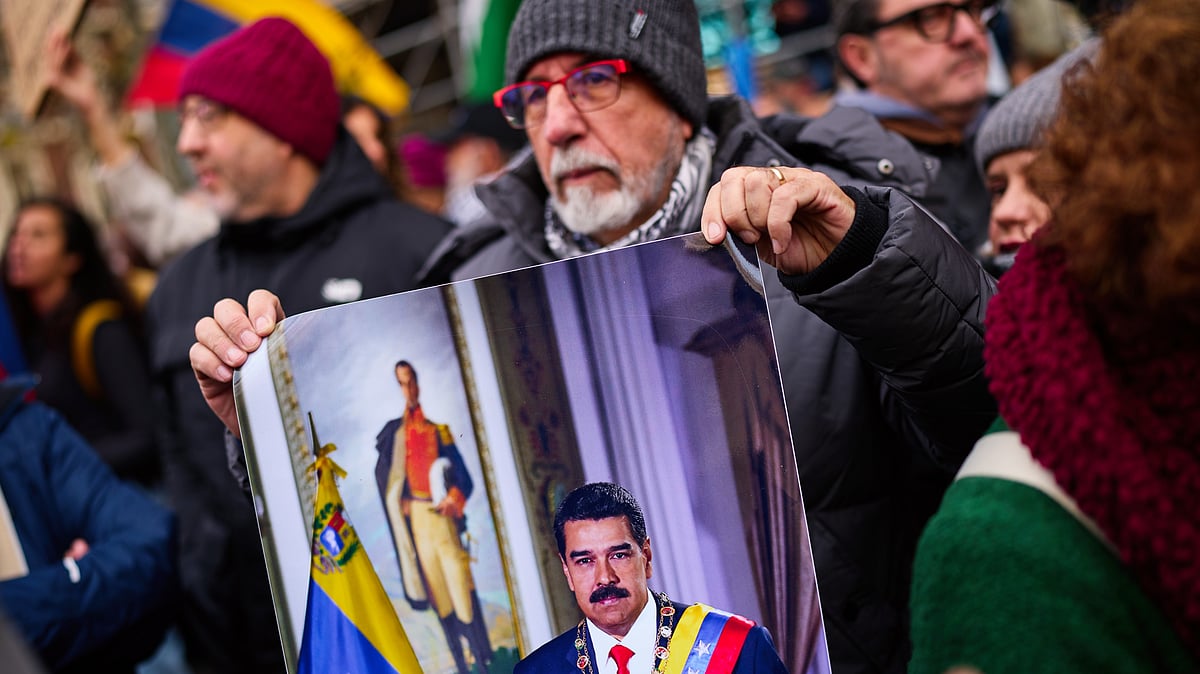
US President Donald Trump’s decision to order a late-night military operation inside Venezuela and arrest sitting President Nicolás Maduro marks a decisive moment in the collapse of the international order.
This was not a covert raid against a non-state militant leader hiding in ungoverned territory. It was the armed seizure of a head of state from his own capital, carried out without Congressional authorisation and in open defiance of the most basic principles of international law.
What makes this moment truly dangerous is not only the action itself, but the reaction that followed. Europe’s muted response, carefully worded statements, and evident desire to look away reveal how the erosion of the rules-based order is now being actively accelerated by silence and selective outrage.
The Trump administration has tried to frame the operation as a law-enforcement action, justified by indictments against Maduro for narcoterrorism. That argument collapses under even minimal scrutiny. States do not send special forces across borders, strike targets in foreign capitals, and remove presidents under the guise of serving arrest warrants. If that principle were accepted, any powerful country could claim the right to abduct foreign leaders it deems criminal.
International law is explicit on this point. Article 2(4) of the UN Charter prohibits the use of force against the territorial integrity or political independence of any state. There is no recognised legal doctrine that allows regime change by abduction, nor one that permits a country to “run” another state because its leader is disliked or indicted abroad.
The administration’s own internal contradictions make the legal breach even starker. Only weeks earlier, senior officials had told Congress that land strikes in Venezuela would require Congressional approval. That position was abruptly abandoned. No new authorisation was sought. No clear legal framework was presented.
Instead, the justification shifted from drug trafficking, to migration, to oil, often within the same news cycle. This was not confusion. It was contempt for constraint. Trump’s subsequent statements about rebuilding Venezuela’s oil infrastructure and running the country “properly” stripped away the remaining pretence. This was about power, resources, and example making.
What followed in Europe was telling. European leaders expressed concern, urged restraint, and reaffirmed abstract commitments to international law. But none were willing to name the act for what it was: an illegal use of force against a sovereign state.
Europe’s failure has been most visible among its largest and most influential actors. France, United Kingdom, and Germany possess the diplomatic weight, military capacity, and historical responsibility to shape a firm European response, yet all three chose caution over clarity.
Paris limited itself to procedural language about international law while avoiding any call for accountability. London urged patience and fact-finding, as if the armed seizure of a foreign president required further verification before moral judgment. Berlin, traditionally the loudest European voice on the sanctity of sovereignty, retreated into ambiguity, wary of offending Washington at a moment of deep strategic dependence.
None of them articulated a clear red line, nor did they propose consequences commensurate with the gravity of the act. Their silence was not neutrality; it was acquiescence.
This timidity stands in sharp contrast to Europe’s rhetoric on Ukraine, where sovereignty is treated as sacred and violations of territorial integrity as existential threats to the global order. The inconsistency is glaring. When Russia violates borders in Europe, it is an assault on civilisation. When the United States does so in Latin America, it becomes a regrettable complication.
This double standard is not lost on the rest of the world. It confirms the long-held notion that international law is enforced selectively, invoked when convenient, and ignored when powerful allies break it. The damage is cumulative. Gaza was a critical rupture, where international court rulings were openly disregarded and civilian suffering normalised without consequence. Venezuela now deepens that rupture. Together they send a clear message: rules apply only to those without power.
The implications extend far beyond Caracas. Trump has already signalled that this operation is not an endpoint. His administration speaks openly about Cuba. His rhetoric has included Colombia. Iran has already experienced direct US strikes. Greenland remains a fixation, openly discussed as a territorial prize rather than a self-governing unit of Denmark and tied to Europe.
If Washington were to move militarily to occupy Greenland, Europe would face a moment of truth it is profoundly unprepared for. It is highly unlikely that European states could prevent such an action. NATO would face an existential crisis, torn between alliance loyalty and the foundational principle that borders are not to be changed by force.
This is the core danger of Europe’s current posture. By refusing to draw red lines when the United States crosses them, Europe is helping normalise a world in which power alone determines legality. The idea that international order can survive if only “rival” actors violate it is a fantasy. Once the strongest state treats law as optional, the law ceases to function. Others will follow and violate it.
The Trump administration argues that Maduro is illegitimate, corrupt, and authoritarian. But international order was designed precisely for such cases. Sovereignty does not exist to protect good leaders. It exists to prevent chaos. The alternative to law is not justice but arbitrariness. If legitimacy becomes something decided unilaterally by the powerful, no state is safe. Elections disputed today can be used tomorrow to justify intervention elsewhere.
The deeper problem is that Trump is not acting in a vacuum. His actions are part of a broader shift toward a world organised around spheres of influence, resource control, and transactional force. This is a return to 19th-century logic dressed in 21st-century technology.
What is new is not the ambition, but the lack of resistance. Europe’s dependence on the US has translated into political paralysis. Fear of abandonment has overridden commitment to principle. In choosing short-term protection, Europe is sacrificing the very norms that made collective security meaningful.
History is unlikely to be kind to this moment. The arrest of a foreign president by military force will be remembered as a turning point, not because of Maduro himself, but because of what it revealed. The United States under Trump is actively dismantling the international order it once claimed to lead. Europe, by choosing accommodation over accountability, is helping to fast forward that destruction.
International order does not collapse with a single strike. It collapses when violations are met with excuses, when principles are applied selectively, and when silence becomes policy. What happened in Venezuela was a warning. The most dangerous response is pretending it was someone else’s problem.
Ashok Swain is a professor of peace and conflict research at Uppsala University, Sweden. More by the author here.
Join our official telegram channel (@nationalherald) and stay updated with the latest headlines