Opinion
When the river runs short
The Cauvery dispute is no longer merely about sharing water, but a river whose ecology, climate and carrying capacity are rapidly changing
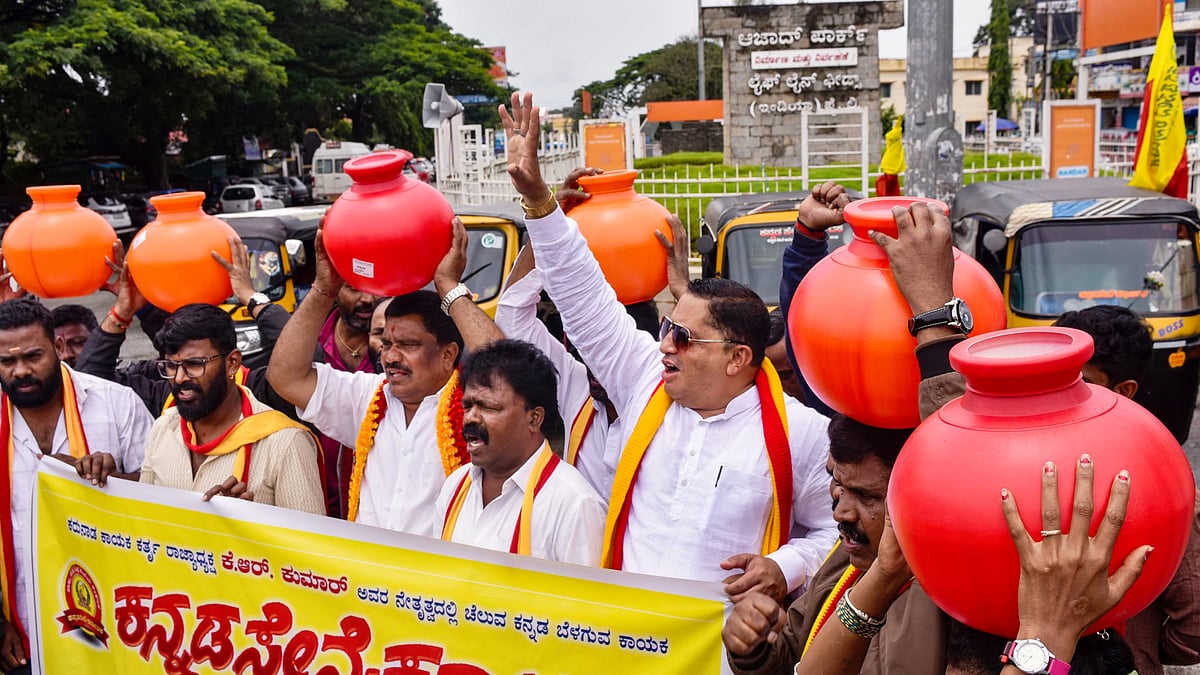
After a long interval, the Cauvery has returned to the centre of southern India's political discourse with all the familiar ingredients of a recurring crisis. There have been accusations and counter-accusations between Karnataka and Tamil Nadu, angry protests by farmers, legal arguments before the Cauvery Water Management Authority, and fresh political rhetoric portraying the river as a symbol of regional pride and injustice.
Yet, almost as suddenly as tempers rose, nature intervened. Days of intense monsoon rain over Kerala's Wayanad district dramatically increased inflows into the Kabini reservoir in neighbouring Karnataka, enabling the state to release more water downstream to Tamil Nadu. Reservoir levels improved, official statements became less confrontational, and the immediate confrontation receded. The respite, however, has come not because governments discovered a lasting solution but because rain temporarily restored a river that had begun to fail them all.
The irony is difficult to miss. Every time the Cauvery dispute resurfaces, public attention focuses almost entirely on court orders, tribunal awards and political statements. Television debates ask whether Karnataka is withholding water or whether Tamil Nadu is demanding more than its share. Lost beneath this noisy confrontation is the river itself.
"The Cauvery is no longer behaving the way it did when colonial agreements were signed in 1892 and 1924, nor even when the Cauvery Water Disputes Tribunal delivered its final award in 2007. The basin is entering an era in which climate change, ecological degradation and exploding water demand are rewriting the assumptions on which every legal arrangement has been built. The real question is no longer who deserves more water. It is whether the river can continue to satisfy either state in the decades ahead", observes writer and critic O.K. Johnny, author of My Journeys Along the Cauvery.
Spread across nearly 81,155 sq. km, the Cauvery basin extends through Karnataka, Tamil Nadu, Kerala and the Union Territory of Puducherry. About 42 per cent of the basin lies in Karnataka, 54 per cent in Tamil Nadu, around four per cent in Kerala and a small fraction in Puducherry.
Rising from Talakaveri in the forested hills of Kodagu at an elevation of about 1,340 m, the river travels nearly 800 km before emptying into the Bay of Bengal. Along its course, it is joined by important tributaries such as the Hemavathi, Harangi, Kabini, Lakshmana Tirtha, Shimsha, Arkavathi, Bhavani, Amaravathi and Noyyal.
Together, they support nearly 40 million people, irrigate one of India's oldest agricultural regions and provide drinking water to some of the country's fastest-growing cities. Few river systems carry such enormous ecological, economic and political significance.
Among the tributaries, none illustrates the interconnected nature of the dispute better than the Kabani. Rising in the evergreen forests of Wayanad, fed by rivers such as Panamaram and Mananthavady, the Kabani flows east into Karnataka before joining the Cauvery near Tirumakudalu Narasipura. Nearly half of its catchment lies within Kerala, where annual rainfall often exceeds 3,000 mm in many parts of the Western Ghats.
The rains over Wayanad tell only one part of the story. The broader Cauvery catchment in Karnataka has experienced a far more uncertain monsoon. Rainfall over Kodagu, Hassan and other upper basin districts remained erratic during the early weeks of the southwest monsoon, resulting in poor inflows into major reservoirs.
Karnataka repeatedly argued before the Cauvery Water Management Authority that it was confronting a distress year and could not compromise the drinking water requirements of Bengaluru, Mysuru and several other towns. Tamil Nadu countered that delayed releases would devastate samba cultivation in the Cauvery delta, where farmers depend on timely water from Mettur dam. The authority postponed crucial decisions, hoping that improved rainfall would ease the crisis. Nature eventually provided temporary relief, but the underlying vulnerability remains unchanged.
"Scientific evidence gathered over the past two decades shows that the southwest monsoon over peninsular India is becoming increasingly variable. The IMD has repeatedly observed that rainfall is now characterised by long dry spells interrupted by short episodes of extremely heavy precipitation. The Intergovernmental Panel on Climate Change has similarly warned that warming temperatures are increasing the frequency and intensity of extreme rainfall events across South Asia.
"The Western Ghats, which serve as the principal water tower of southern India, are now witnessing this transformation with increasing regularity. Instead of receiving steady rainfall over several months, catchments often experience cloudburst-like events that generate floods but fail to sustain river flows during the lean season," says climate scientist S. Abhilash.
The Cauvery is therefore becoming a river of extremes. Reservoirs that remain alarmingly depleted through much of the monsoon can suddenly fill within days, compelling authorities to release enormous quantities of water downstream. Yet once these intense rainfall episodes end, inflows often decline just as rapidly because the rains have not been sustained.
Climate alone, however, does not explain the crisis. Equally significant is the gradual weakening of the landscapes that produce the river itself. The forests of Kodagu and Wayanad have long functioned as giant natural reservoirs. Dense vegetation, rich organic soils and wetlands absorb monsoon rainfall and release it gradually into streams, ensuring perennial flows even after the rains cease. This slow release of groundwater, known as base flow, is what historically sustained the Cauvery through the dry months.
But decades of forest fragmentation, plantation expansion, road construction, quarrying, tourism infrastructure and unplanned development have reduced the capacity of these catchments to regulate water naturally. Hydrologists increasingly warn that the Western Ghats are losing their ability to behave as India's great ecological sponge.
The consequences are visible across the basin. Kodagu has witnessed repeated landslides and floods in recent years. Wayanad has experienced devastating disasters that have exposed the fragility of mountain ecosystems subjected to both climate extremes and unsustainable land use. Ironically, the same landscapes that now generate destructive floods are also becoming less effective at maintaining river flows during the dry season.
The transformation of the Cauvery basin becomes even clearer when one looks beyond rainfall and into the extraordinary rise in human demand. When the princely State of Mysore and the Madras Presidency negotiated the 1924 agreement, Bengaluru was little more than a provincial administrative town with fewer than half a million people. Today, the Bengaluru metropolitan region is among the fastest-growing urban centres in the world, with a population estimated at well over 14 million.
The city draws almost all its drinking water from a river that flows nearly 100 km away and nearly 500 m below it. Every day, more than 2,200 million litres of Cauvery water are pumped uphill through one of the most energy-intensive urban water supply systems anywhere in the world.
Even that is proving inadequate. The city's daily requirement is estimated to have crossed 3,000 million litres, forcing thousands of neighbourhoods to depend on rapidly depleting groundwater and an enormous private tanker economy. During the severe water crisis of 2024, dry borewells, empty lakes and long queues for tanker water offered a glimpse of what an urban future built on a shrinking river might look like.
Bengaluru is not alone. Mysuru, Mandya and several emerging industrial towns across southern Karnataka have expanded rapidly over the past three decades. New industrial corridors, educational institutions, residential townships and technology parks have all added to the pressure on the Cauvery. Drinking water has understandably become the state's foremost priority, and no government can politically afford to compromise the needs of its cities.
That is why every distress year places Karnataka in an impossible position. Release more water to Tamil Nadu and risk domestic outrage, or retain more water and face legal challenges and political condemnation downstream. Every chief minister, irrespective of party, has eventually found himself trapped between hydrology and electoral politics.
Agriculture has undergone an equally dramatic transformation. Karnataka has steadily expanded irrigation through reservoirs such as Krishna Raja Sagar, Kabini, Hemavathi and Harangi, besides numerous lift irrigation schemes. Large areas that once depended entirely on rainfall are now cultivated with irrigated paddy, sugarcane and other water-intensive crops.
The state has consistently argued that it was historically denied its fair opportunity to develop irrigation because of colonial agreements that favoured the downstream Madras Presidency. That argument found partial acceptance in the Supreme Court's 2018 judgement, which slightly enhanced Karnataka's share while recognising Bengaluru's growing drinking water needs. Yet even the revised allocation has proved inadequate during years of poor rainfall because demand has risen much faster than the river's capacity to supply it.
Tamil Nadu's predicament is no less compelling. The Cauvery delta remains one of India's oldest and most productive agricultural landscapes, often described as the rice bowl of the south. Stretching across Thanjavur, Tiruvarur, Nagapattinam, Mayiladuthurai and adjoining districts, the delta supports millions of farmers and agricultural workers.
The annual opening of the Mettur Dam is more than an administrative decision; it marks the beginning of the samba cultivation season on which the rural economy depends. Every delay in water release pushes back transplantation, reduces yields and increases indebtedness.
Farmers have repeatedly been forced to abandon the second crop or reduce cultivation because of uncertain water supplies. Scientists have also warned that declining freshwater flows are allowing seawater to intrude into coastal aquifers, increasing salinity and threatening the long-term sustainability of agriculture in the delta. For Tamil Nadu, therefore, the Cauvery is not merely a question of irrigation. It is about food security, rural livelihoods and the survival of an entire civilisation that has evolved around the river over centuries.
"This is why simplistic political narratives do little justice to the complexity of the dispute. Karnataka is not merely refusing to release water out of regional stubbornness. Tamil Nadu is not demanding water simply to score political points. Both states are responding to genuine social, economic and ecological pressures," points out farmer rights activist P.T. John, who is focused on the whole basin region.
What receives far less attention is the silent contribution of Kerala to the entire basin. The state receives only a small allocation under the Cauvery water-sharing arrangement, yet the forests of Wayanad play a disproportionately important role in sustaining the river.
The Panamaram, Mananthavady and other streams rising from the Brahmagiri hills merge to form the Kabani before entering Karnataka. Every spell of heavy rain over Wayanad raises water levels in the Kabini reservoir. Every year of poor rainfall in these forests reduces inflows downstream. Yet Kerala rarely figures in the political discourse except as a geographical footnote.
The recent rains were another reminder that the future of the Cauvery is inseparable from the ecological health of the Western Ghats. Unfortunately, these mountain landscapes are themselves under severe pressure. Forest fragmentation, conversion of natural forests into plantations, expanding road networks, tourism infrastructure, quarrying and unplanned construction have steadily altered the hydrology of the catchments.
El Niño years frequently weaken the southwest monsoon over peninsular India, reducing inflows into reservoirs and intensifying interstate tensions. At the same time, global warming is increasing the frequency of short-duration extreme rainfall events. This changing behaviour of the monsoon is exposing the limitations of water-sharing arrangements based primarily on historical averages. Agreements framed on twentieth-century hydrology are now confronting a twenty-first-century climate.
The political response, however, has remained remarkably unchanged. Every distress year produces familiar images of blocked highways, angry demonstrations, vandalised buses and speeches invoking regional identity. Water becomes an instrument of electoral mobilisation rather than an opportunity for scientific cooperation. TV studios amplify confrontation while conversations about groundwater depletion, watershed restoration, rainwater harvesting and demand management receive only passing attention. The river is treated as an object to be divided rather than an ecosystem to be protected.
That approach is no longer sustainable. The future of the Cauvery will depend less on litigation than on restoring the ecological foundations that sustain it. Protecting the forests of Kodagu and Wayanad should become as important as building reservoirs. Wetlands that once stored monsoon water must be revived. Cities such as Bengaluru need to recycle treated wastewater on a much larger scale, harvest rainwater more effectively and reduce transmission losses.
Agriculture in both Karnataka and Tamil Nadu must gradually move towards more efficient irrigation systems and cropping patterns that reflect changing water realities without undermining farmers' livelihoods. Equally important is the need for a transparent distress-sharing formula that recognises the interests of all basin states while responding to changing climatic conditions.
K.A. Shaji has chronicled rural distress, caste and tribal realities, environmental struggles and development fault lines. More by the author here
Join our official telegram channel (@nationalherald) and stay updated with the latest headlines