Opinion
Why are CAG warnings falling on deaf ears?
Recent CAG reports have exposed fraud and mismanagement across GST collections, DBT, skill schemes, housing programmes and healthcare delivery
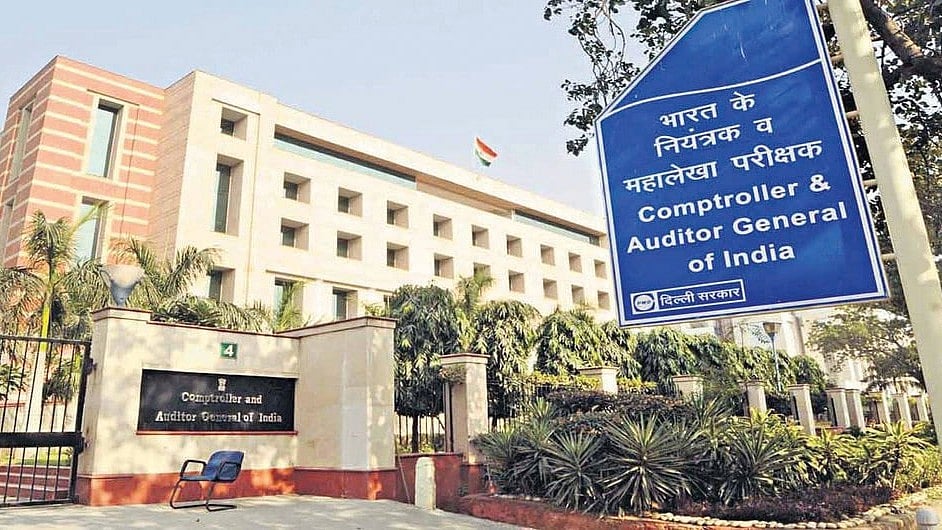
A decade and a half ago, a report of the comptroller and auditor general (CAG), claiming a huge ‘presumptive’ loss in the sale of telecom spectrum and coal blocks, ignited a nationwide movement against corruption and voted out the United Progressive Alliance (UPA) government. Today, a series of damning reports since December 2025, exposing systemic fraud across India’s flagship welfare schemes, are met with deafening silence.
CAG reports in the past weeks have exposed fraud and mismanagement in goods and services tax (GST) collections, direct benefit transfers (DBT), skill development schemes, housing programmes and healthcare delivery—with amounts running into thousands of crores of rupees. Yet, the findings of a constitutional audit authority no longer stir the national conscience. What explains this contrast?
Digital mirage
The ruling government has repeatedly claimed that DBT and ‘Digital India’ were a game-changer that enabled the smooth transfer of `34 lakh crore directly to beneficiaries and ‘saved’ `2.7 lakh crore. Ministers routinely disparage former prime minister Rajiv Gandhi’s 1985 observation that only 15 paise of every rupee reached the intended beneficiaries in drought- affected areas, contrasting this with much better quality of delivery. But recent CAG audits suggest digital systems have not solved this problem; nor can they hide it any longer.
On 18 December 2025, CAG Sanjay Murthy warned that thousands of crores of rupees were flowing through DBT systems without mandatory checks. CAG reports have flagged pensions being paid to thousands of deceased beneficiaries in 2023 because databases are not being ‘de-duplicated’ and many government departments continue to work in silos even within the same ministry. This indicates structural failures, despite the availability of much-vaunted digital infrastructure.
CAG reports tabled at the end of 2025 and 2026—mostly for the period ending 2023—show that digital systems are often facilitating fraud rather than preventing it. The audits have flagged ghost payments, glitches, data fraud, payments to ineligible beneficiaries, unutilised funds and outright mismanagement leading to thousands of crore rupees being squandered, while the poorest Indians are denied welfare, homes and healthcare.
Our own digging into just 250 accounts with the Reserve Bank of India’s (RBI’s) Depositor Education and Awareness Fund (DEAF) shows welfare funds transferred to it after staying dormant for a decade.
Shockingly, even sophisticated, automated systems for tax collection have turned out to be dodgy. On 11 December 2025, a CAG audit exposed inconsistencies worth `21,695 crore in GST collections. The report detailed systemic failures including mismatches in input tax credit (ITC), compliance deviations in over 2,519 cases and short payments of tax and interest. If the country’s primary revenue engine is leaking, is it surprising that social welfare schemes are riddled with bigger holes?
Skills illusion
The rot extends to health and skill development. A performance audit on the Pradhan Mantri Kaushal Vikas Yojana (PMKVY), tabled in December 2025, revealed that between 2015 and 2022, over 94 per cent of beneficiary records— affecting 9.06 million people had missing, bogus or invalid bank details. Placeholders like ‘123456’ or ‘null’ were used for bank accounts, indicating that the identity of trainees and the veracity of payments cannot be trusted. Thousands of underage and ineligible candidates were certified and training partners made wildly fake claims such as conducting training on 31 February! While the government approved an additional `8,800 crore to restructure the mission in early-2025, lakhs of candidates did not receive the promised incentives.
Similarly, over `1,024 crore of Central funds for scheduled caste/ scheduled tribe (SC/ST) students in Himachal Pradesh lay idle due to ‘non-compliance’, leading to dropouts among those who need the support most.
Awas Yojana fakes
The housing sector has an equally grim story. Despite claims of great progress, a recent CAG audit of the Pradhan Mantri Awas Yojana (PMAY) in Uttar Pradesh unearthed massive implementation gaps. Tens of thousands of houses claimed as ‘complete’ were found to be of poor quality or missing essential toilets, electricity and water. It also detected cyber fraud, where `86.20 lakh, intended for 159 beneficiaries, was diverted to unauthorised bank accounts.
In Chhattisgarh, housing benefits were handed to those earning above the income ceiling, while over `230 crore remained blocked due to geo-tagging and social audit issues. Significant funds were simply stuck and beneficiaries remained unpaid due to delays in fund transfers, inadequate beneficiary verification and unresolved payout issues.
Fatal failures
That CAG audit findings are not getting the attention they deserve is clear from the water contamination deaths in Indore which has been winning awards for being India’s cleanest city. A CAG audit in 2019, covering the period between 2013 and 2018, had warned that nearly 900,000 people were being supplied contaminated water. Remember, the audit covered a period from 2013 to 2018 and the vulnerability to raw sewage seeping into drinking water had been highlighted! This is by no means an exception. In 2024, a CAG report pointed out how urban local bodies had consistently failed to implement mandatory water quality testing and pipeline maintenance protocols. Activists have labelled this ‘criminal negligence’. And yet, in January 2026, over a dozen people lost their lives and hundreds of others fell ill after drinking water contaminated with sewage.
Parallel horrors have emerged in Delhi, our capital city. A Delhi Jal Board report tabled this month reports that 55 per cent of groundwater is unfit for consumption, posing serious health risks; moreover, carcinogenic poly electrolytes continue to be used at water treatment plants, despite explicit bans.
The Jal Jeevan Mission (JJM) is similarly plagued by fraud and misreporting. While funds flow into JMM, the water pipelines are often missing or remain dry after installation. A policy circle report documents over 17,000 complaints involving procurement lapses and has recorded price deviations of up to 30 per cent in Rajasthan and Uttar Pradesh, leading to the blacklisting of several contractors and action against 2,300 officials.
Healthcare travails
Nowhere is the crisis of accountability more visible than in healthcare. The CAG’s 2023 performance audit of the Ayushman Bharat-Pradhan Mantri Jan Arogya Yojana (AB-PMJAY) had already made headlines when it exposed 749,000 ‘ghost’ beneficiaries registered under a single fake mobile number (9999999999). By January 2024, the rot had spread to what investigators call a ‘murder for money’ racket. In Gujarat, a doctor was arrested for performing unnecessary heart surgeries on villagers solely to siphon off PMJAY funds. Over 1,000 hospitals have since been de-empanelled and `231 crore in penalties levied. At the same time, private hospitals are increasingly refusing to offer ‘free’ treatment, frustrated with losses resulting from unpaid reimburse ment. Every other day, viral media posts have exposed the hollowness of the healthcare promise, even while large sums are earmarked for the scheme.
Normalising failure
That CAG findings provoke little public reaction shows that we have normalised corruption and failure, or worse, that citizens are barely aware that vast sums allocated for poverty reduction in every Union Budget are simply not delivering results. Digital India was meant to remove intermediaries; instead, it has often replaced them with opacity, automated fraud and ghost beneficiaries. Those who attempted to expose scholarship scams have paid with their lives. Even the connection between large public infrastructure projects and election funding—outside the CAG’s remit— has come to be accepted without serious scrutiny of shoddy execution, planning failures or outright collapse.
CAG fulfils its constitutional role by documenting these failures; but its reports increasingly resemble post-mortems on programmes already buried by the time Parliament sees them. When the media does not carry these findings forward, citizens lack the information needed to demand accountability, prosecution or structural reform. In the absence of such pressure, governance is being driven more by propaganda than by the delivery of a better quality of life.
Sucheta Dalal is a renowned business journalist. She is managing editor of moneylife.in, where this piece was first published
Join our official telegram channel (@nationalherald) and stay updated with the latest headlines