POLITICS
Assam: ‘Divide and rule’ comes in handy amid identity crisis
Tribes up in arms against state government over proposed ST status for six more communities currently classified as OBCs
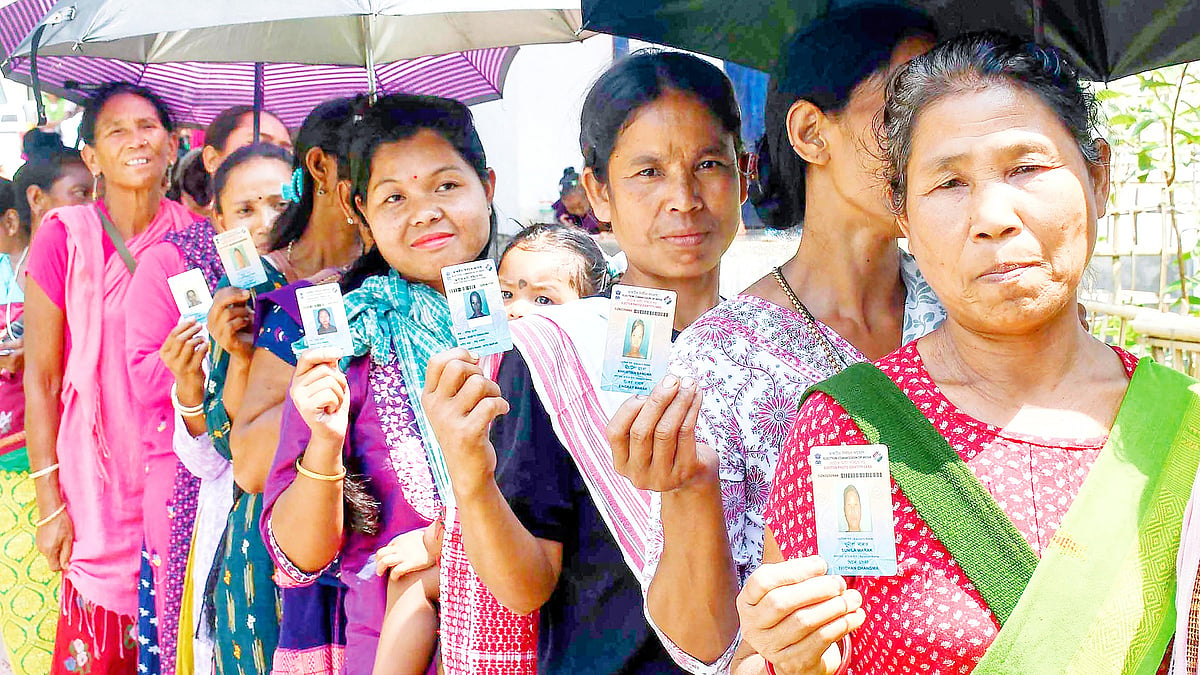
Assam’s tribes are up in arms against the state government after a Group of Ministers (GoM) recommended Scheduled Tribe (ST) status for six more communities currently classified as Other Backward Classes (OBCs). These six communities — Tai Ahom, Chutia, Moran, Matak, Koch-Rajbongshi and ‘Tea Tribes’ (Adivasis) — were promised ST status in 2015–16 but are only now being enlisted, just ahead of the 2026 Assembly elections.
The GoM report, tabled in the Assembly on 29 November, proposes creation of a distinct “ST (Valley)” category for the six communities, granting them separate reservation quotas in state government jobs and educational institutions.
Assam’s existing ST quota is split between ST (Plains) at 10 per cent and ST (Hills) at 5 per cent. While these quotas will remain protected, the inclusion of the six communities will push Assam’s tribal population to nearly 40 per cent, significantly reshaping the reservation landscape.
This recommendation has ignited fierce opposition from the Coordination Committee of Tribal Organisations of Assam (CCTOA), which represents 14 recognised tribal communities, including Bodo, Karbi, Miri, Rabha and Kachari. The CCTOA sees the move as a dilution of hard-won rights, threatening political representation and cultural autonomy.
“The GoM recommendations will dilute the very basis of setting up autonomous councils to protect tribal culture, language and customs,” said a senior Bodo leader, highlighting anxieties that tribal identities and privileges could be eroded if the new groups enter the ST fold.
Dissatisfaction over granting ST status to these communities boiled over in Bodoland Territorial Region on 29 November — a day before the report of the GoM was tabled — when thousands of students marched from Bodoland University to the Bodoland Territorial Council (BTC) Secretariat in Kokrajhar. The massive rally started peacefully, but on the way back from the BTC Secretariat, it turned violent.
The students broke through the police cordon, forced open the Secretariat gates and ransacked offices. The district administration clamped prohibitory orders and brought the situation under control. BTC chief executive member Hagrama Mohilary blamed the All-Bodo Students’ Union (ABSU) and the United People’s Party Liberal (UPPL) for the violence, pointing out that such violent incidents have no place in a democracy.
ABSU president Dipen Boro, however, refuted Mohilary’s charges. “We were in a meeting when we heard students were marching. They were from different local colleges and tribal communities. We never want violence in a peaceful movement,” Boro told National Herald, adding, “If even one per cent proof is found against ABSU, I will resign and walk straight to jail.”
This unrest reflects a growing fissure within Assam’s tribal politics, where student groups fear intensified competition for limited reservations and political spaces.
The timing of the report is unmistakably linked to Assam’s electoral calendar. After years of delay, the BJP government appears eager to consolidate votes by co-opting communities whose inclusion in the ST category would create a sizeable captive electoral bloc.
“We welcome the state government’s decision,” said Palindra Borah, president of the All-Moran Students’ Union. The Moran community is concentrated in Upper Assam’s Tinsukia, Dibrugarh and Sivasagar districts. Borah’s reaction lends credence to the argument that the torch light marches and rallies organised by these six communities at various locations across Assam in August–September this year had the tacit support of Himanta Biswa Sarma’s government.
That the GoM report will erode their political power is a concern among Assam’s tribes. Take for instance the Bodoland Council which has 46 members. Of these, 40 are elected and six are nominated by the governor of Assam. Of the 40 elected seats, 30 are reserved for ST, with 15 open for non-Bodo tribes.
If the GoM recommendations are implemented, the newly-anointed tribes will be able to contest these seats.
Tribal politicians like Mohilary sense an opportunity to co-opt the new tribes and expand their political support base. This has pitted them against tribal students who have taken to the streets.
“The GoM report may have added a separate category to Assam’s tribal list, but when our boys and girls compete for all-India examinations like railways, banks, medical, IIMs and IITs, they will be clubbed into the single all-India ST list. A larger number of tribal students from Assam will compete for the same number of seats,” explained a student leader.
And then, there is the question of Axom asmita (Assamese pride). Although Assam’s tribes have retained their language, culture, customs and religion, many of the six OBC communities in question have subsumed themselves into a pan-Axom cultural identity, now revived by Zubeen Garg’s unfortunate and mysterious passing.
Chief minister Himanta Biswa Sarma has so far pandered to Garg’s unifying cultural undercurrent, positioning himself as a crusader delivering justice. He appears to have pinned his hopes on these neo-converts to carry Garg’s cross-community appeal to the hustings.
The political roadmap ahead of the Assam elections is clear, with the tribal question expected to dominate much of the volatility. How the government balances the aspirations of the six communities against fears of established tribes’ marginalisation will shape the social fabric and electoral outcomes for years to come.
Sourabh Sen is a Kolkata-based independent writer and commentator on politics, human rights and foreign affairs. More of his writing may be read here
Join our official telegram channel (@nationalherald) and stay updated with the latest headlines