Opinion
Clouds darken again over West Asia
The war in West Asia has expanded, and it has all sorts of far-reaching consequences, writes Ashok Swain
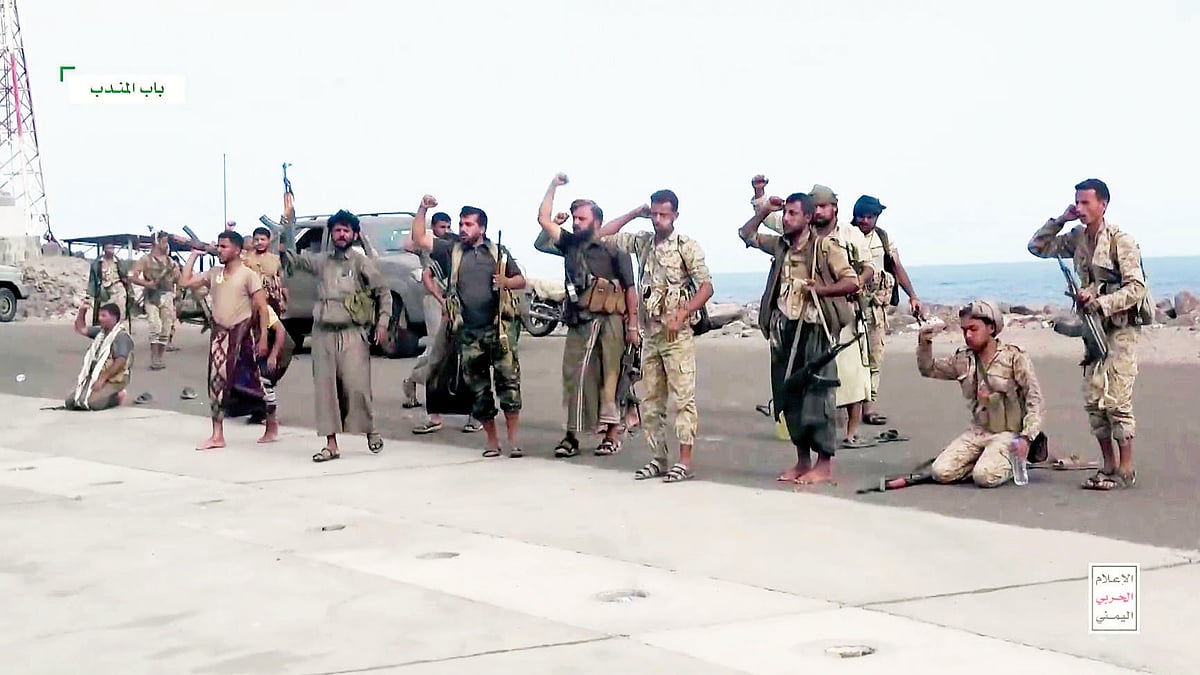
The Houthis’ dramatic advance along the Red Sea, their control of areas around the Bab al-Mandab strait and their renewed missile and drone attacks on Saudi Arabia have opened another front in the widening confrontation between Iran and the United States. This isn’t simply the revival of Yemen’s civil war; it is a precursor to the next round of the US-Iran war, and Trump is playing a dangerous game.
During the first months of the war, the Houthis kept their distance from the fighting even as Hezbollah and other Iran-aligned forces in Iraq got involved in the confrontation.
That restraint has now ended. The Houthis have swept through strategically important territory along Yemen’s western coast and strengthened their position around Bab al-Mandab, through which roughly 10 per cent of global trade normally passes. They have attacked Saudi shipping and launched missiles and drones towards Riyadh, Yanbu and other targets inside the desert kingdom.
The geography makes the situation particularly alarming. Iran has already severely disrupted shipping through the Strait of Hormuz. Saudi Arabia responded by relying increasingly on its East-West Pipeline, known commercially and officially as Petroline, which carries crude from the eastern oilfields across the kingdom to Yanbu on the Red Sea. But that alternative route has now become vulnerable as well. The pipeline has been attacked, and the Houthis are in a much stronger position to threaten Saudi ships passing through Bab al-Mandab.
Saudi Arabia thus faces simultaneous pressure on both its eastern and western oil-export routes. Yet the US, its biggest ‘oil-for-security’ ally, is standing back. It continues to provide intelligence but Trump has declined direct military intervention.
Simultaneously, Washington is engaging with the Houthis via Oman. The Houthis have assured the US that its ships will not be attacked, that their target is Saudi Arabia. For Riyadh, the situation is deeply disturbing.
Saudi Arabia hosts US military facilities, is a big buyer of American weapons and has built much of its national security strategy around ties with Washington. But Trump has his own strategic calculus in which he is weighing the costs of opening another war front just ahead of midterm elections in the US. Besides, in his world view, pacts made yesterday were made too long ago to get in the way today.
Crown Prince Mohammed bin Salman knows this. Even when Saudi oil installations at Abqaiq were attacked in 2019, Trump had refused military help. That experience contributed to Riyadh’s subsequent efforts to repair relations with Tehran and diversify its security partnerships.
Saudi Arabia is discovering that the US security guarantees are in effect invalid. Trump has left his Gulf allies to manage the consequences of the war with Iran. There is likely another calculation driving his decision to not enter the fray militarily with the Houthis. Israel holds its general election on 27 October. Netanyahu faces a difficult contest. His political identity and relevance are built around the argument that he possesses the determination and experience to confront Iran and protect Israel in a hostile region.
Trump’s reluctance to intervene directly against the Houthis increases pressure on Saudi Arabia to look elsewhere for military assistance. Israel has the intelligence, air power and missile-defence capabilities that Riyadh badly needs at this point. If Saudi Arabia is eventually forced to seek Israeli assistance against the Houthis, Netanyahu could present such cooperation as evidence that Israel has become indispensable to the security of the region.
Trump’s strategy pivots on electoral timing in another way. The Iran war is unpopular in the US and is a big reason why his own popularity has plummeted at home. Expanding the war effort in West Asia is only likely to worsen his already bleak prospects in the midterm election in November.
So, he might desist for now, but has been heard saying the Iran conflict will end immediately after the midterms. Which suggests he might wait till the elections before cranking up the war effort again.
At any rate, Iran seems to be preparing for another round; it has good reason to mistrust that Trump will choose diplomacy or honour commitments. Even though some diplomatic channels are open — though Pakistan and Qatar — Iran’s military leadership has warned that renewed US attacks will produce retaliation at scale against US interests throughout the region.
The Houthis are not simply military puppets controlled by Iran. They have their own ideology, domestic constituency and strategic objectives. But their offensive unquestionably increases Tehran’s leverage. Saudi Arabia is already reportedly running short of missile interceptors and has sought assistance from Britain, France, Pakistan and Egypt. America’s own stocks have also been strained by months of war.
Mohammed bin Salman knows the cost of this war only too well. His Vision 2030 economic transformation blueprint for Saudi Arabia depends crucially on political stability, foreign investments and predictable energy exports. The reconciliation with Iran, the easing of Saudi involvement in Yemen and the rejig of his country’s security architecture were all attempts to forestall a regional war that can derail those economic ambitions.
Despite all those precautions, Saudi Arabia is finding itself exposed. Even its new security arrangements with Turkey and Pakistan (the Makka Pact) have yet to provide meaningful military protection. Iran can pressure the kingdom in the Gulf; the Houthis can threaten it at the other end from Yemen. Washington is refusing to intervene directly. Inevitably, the situation brings into the frame the possibility of seeking Israeli assistance.
Netanyahu has an obvious political interest in demonstrating that cooperation with Israel offers Arab governments protection against Iran and its allies. But accepting visible military assistance from Israel is a political minefield for MBS. Especially when the Palestine question has such high visibility, aligning with Israel can derail partnerships with Turkey and Pakistan.
Trump’s dangerous calculation may be that Mohammed bin Salman will be forced into Israel’s lap. Allowing an ally to become more insecure in the hope that insecurity will reshape political alignments is a hazardous project. Washington cannot control all the consequences of such pressure.
Ashok Swain is a professor of peace and conflict research at Uppsala University, Sweden. More by the author here
Join our official telegram channel (@nationalherald) and stay updated with the latest headlines