Opinion
Why is it taboo to discuss corruption in the judiciary?
Uproar over brief reference to judicial corruption in an NCERT textbook points to deeper challenge, writes Yogendra Yadav
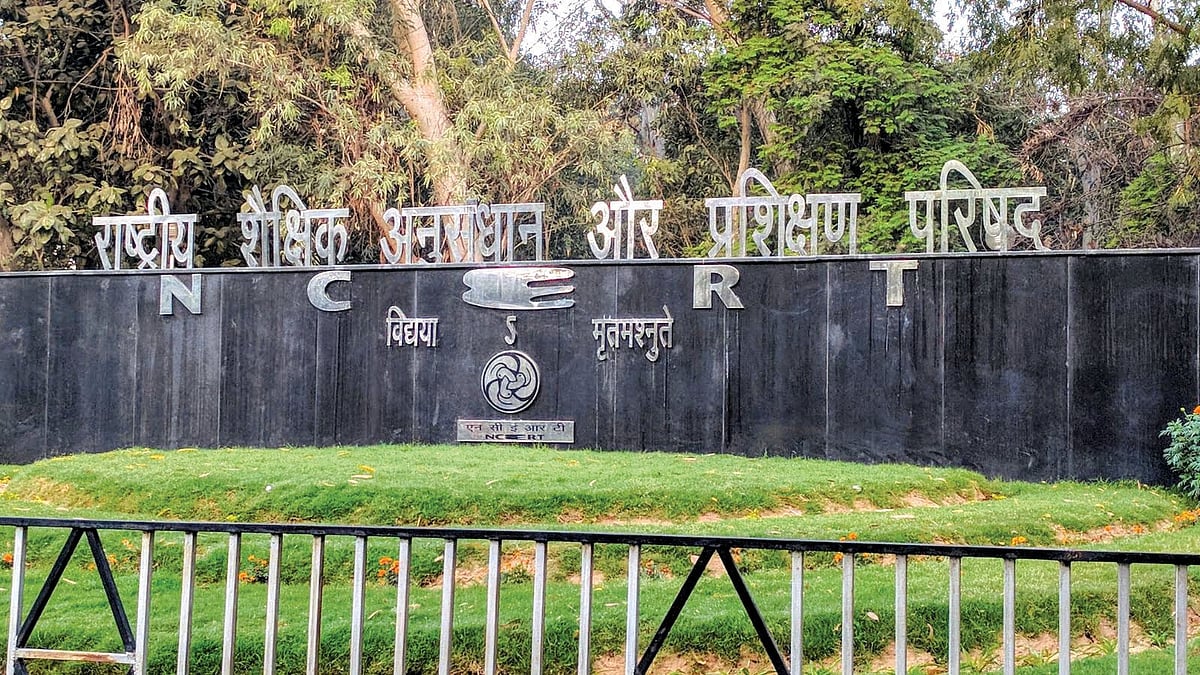
At first glance, the whole episode looked like a storm in a teacup. But if you look a little more closely, the uproar over a brief reference to corruption in the judiciary in an NCERT textbook points to a deeper challenge confronting our democratic system. The real question is not who hatched a conspiracy to defame the judiciary and why. The real question is what happened under the cover of stopping the alleged conspiracy.
The story itself was rather ordinary. After a gap of nearly twenty years, the National Council of Educational Research and Training (NCERT) — the body that publishes textbooks for CBSE schools — has started releasing a new set of textbooks.
One of these is the Class VIII Social Science textbook. In the second part of the book, which introduces students to the country’s political system, there is a chapter on the judiciary. After providing a general overview, the chapter includes a small section on the problems associated with it. One page carries the subheading ‘Corruption in the Judiciary’. The entire controversy revolves around this page.
The interesting thing is that there is nothing in this section that could reasonably be called controversial. I’m not enamoured of the NCERT’s new textbooks. But I see nothing objectionable in this portion — no sweeping claim that the entire judiciary is corrupt, no sensational tales of wrongdoing in the courts.
The book simply notes, in a stiff official tone, that like all democratic institutions, the judiciary too faces certain challenges. It then says, quite plainly: ‘People encounter corruption at various levels of the judiciary. As a result, it becomes even harder for poor and marginalised people to obtain justice. Due to a shortage of judges, complex legal procedures and weak infrastructure, the judicial system also faces the burden of a very large number of pending cases.’
The text then goes on to explain what steps the judiciary has taken to address these challenges — mentioning the code of conduct framed by the Supreme Court and the existence of internal inquiry mechanisms. One could certainly debate whether such information is of any value to students in Class VIII. One might ask whether the book also discusses corruption in the executive and the legislature. But there was nothing here that could possibly amount to contempt of the judiciary.
Now look at the uproar that followed. A national daily splashed this section on its front page, as if the textbook had attempted some radical experiment. In great haste, the Supreme Court took suo motu cognizance of the matter — the same Supreme Court that rarely takes suo motu notice of hate speeches printed daily in newspapers or of the lies and venom that find their way into textbooks.
The chief justice of India thanked the media for bringing the ‘truth’ to light. Pulling up the NCERT, the court suggested the possibility of a deep conspiracy and issued a show cause notice to the NCERT director. For good measure, both the court order and the show cause notice dangle the threat of possible ‘contempt of court’ proceedings.
Seeing such swift action from the court, many must have wondered: if only the court displayed the same urgency and sternness in other matters as well. Many orders of the Supreme Court gather dust in government files. Every day, judicial directives are flouted — whether it is orders to halt bulldozer justice or directives to abolish the practice of manual scavenging. One only wishes the Supreme Court would brandish its powers under the Contempt of Courts Act in these cases too.
But who would dare question the Supreme Court? Or say: Your Lordships, there is nothing objectionable in the textbook. Spend a day in any courthouse listening to conversations about the corruption that people encounter there, and you’ll forget about this book.
Who would remind the court that only a few months ago the entire country read reports about the exploits of a judge of the Delhi High Court? Or that in the past ten years as many as 8,630 complaints of corruption have been registered against members of the higher judiciary? Who would ask how many of these complaints were investigated? Or how many judges adhered to their own code of conduct?
The NCERT promptly surrendered. Without offering a single argument in defence of its own textbook, it issued an apology. The government threw up its hands, and the education ministry washed its hands of the matter. The book was not merely withdrawn; copies already distributed were recalled. As though in a country flooded day and night with fake news, hate speeches, pamphlets and incendiary films, this Class VIII textbook was the most dangerous piece of literature going around.
Whatever the intentions of the honourable judges may have been, the message of this order will be interpreted in only one way: no one should dare point a finger at the judiciary. It inevitably raises the suspicion that at a time when serious questions are being raised about the independence and impartiality of the judiciary, the institution is choosing to silence criticism rather than introspect.
The government will not object — as long as the judiciary does not prevent it from silencing its own critics. A tacit partnership, where the judiciary remains silent when the government gags its critics and the government keeps mum when the judiciary does the same, can only be deeply injurious to our democracy.
The issue is not a Class VIII textbook; the issue is the book we call the Constitution.
Views are personal. More of Yogendra Yadav’s writing can be read here
Join our official telegram channel (@nationalherald) and stay updated with the latest headlines